




by: Alexandra Korey
We’re seated at a long table, a group of strangers invited by the town to promote their new sustainable tourism initiatives. I’m the only non-Italian and am doing my best to blend in; some of the other bloggers know each other from Instagram or from other trips, but I’m new here. The server approaches the table; silence spreads as we anticipate the night’s menu in a region known for its meat and pasta. She loudly inquires: “Who’s the one allergic to garlic who can’t eat meat, shellfish, pasta, bread, cabbage, peppers, or beans?”
Yeah, that’s me.
I raise a finger, beckoning the server to come over so we can negotiate my meal without doing it across the heads of strangers. I am vastly apologetic of my dietary limitations and assure them that it is for medical reasons.
It happens every time, to the point that I’m now quite used to discussing my bowel movements with people I met five minutes ago at the table. Because inevitably, as soon as the orders are taken, people want to know what ails me. Are you vegetarian? Are you gluten-free? Are you lactose-free? Any group will include people in those categories, and it’s a pretty good conversation starter, really. But what ails me is more complex: I have ulcerative colitis (UC), an autoimmune disease in the category called IBD (Inflammatory Bowel Disease) that affects the intestines. It’s not always so pleasant to discuss.
Having this chronic illness affects my daily life and ultimately shapes my identity. My close friends have embraced my dietary needs and are willing to deal with the rigidity this disease forces me into. But in a general sense, in Italy, the Mulino Bianco family’s long, spontaneous carb-heavy lunches are more than a cultural ideal, they’re an expression of love; does having UC risk excluding me from the table?

The Change of Life
Current research suggests that up to 25% of new IBD cases are diagnosed in patients over 50. For women, this often coincides with perimenopause, when the body is already undergoing a chaotic hormonal restructuring. The drop in estrogen levels is thought to influence gut permeability and the microbiome, opening the door for an autoimmune “system failure” while chances are lots of other things in your life are also changing and causing stress. I can count on the fingers of one hand my female friends who haven’t made a major life adjustment around age 45-50.
My whole life I’ve been a “picky eater” and have had a “dodgy tummy”. Things got really bad as a young teenager as I suffered daily with nausea. By the time I was in university, every morning felt like a hangover. In graduate school, I was bedridden two days out of ten. Unable to find anything physically wrong with me, I was diagnosed with “IBS” which, in my non-medical opinion, is a catch-all label that doctors use when they can’t figure out what is wrong with you.
IBS (Irritable Bowel Syndrome) became a household term when Ben Stiller went on a fictional date in 2004 and ate spicy food in the film Along Came Polly. Thank you, Ben, for this cringey and unintentional awareness-raising for IBS. I don’t know if that bathroom scene was as triggering for you as it was for me, but it gave me some validation and people started to understand that, even if it’s just a “syndrome”, it’s pretty debilitating. The big problem with IBS is that there’s no cure. There are foods to avoid, and lifestyle changes to make, but you cannot control it. As a control freak, this is the worst news ever.
My IBD diagnosis came at Easter 2019, in my early 40s. My symptoms worsened significantly in early 2019, with Ben Stiller moments more than a dozen times a day. My family doctor at the time brushed it off: “maybe you overate at Christmas”. Doctor Vinci, you do not know me. Alexandra does not overeat. Alexandra controls everything, especially what goes into her mouth. Why did I not push back at the time? It took three months, massive weight loss and a complete non-absorption of nutrients to finally see a gastroenterologist and get on a proper therapeutic plan.
Between IBS and IBD there is just one letter, but the D in disease provides additional validation that forces people to actually respect the danger because IBD can actually kill you if left untreated. The diagnosis is a blessing because there actually is available treatment, with research being done on even more promising approaches. I was lucky that the first line of defense worked quite well on me, and now, in my seventh year I’ve finally regained the muscle, energy and weight I lost, although I’m still not in remission and will likely be on injection drugs for life.
How did I do it? My approach has been to get to know my enemy, to figure out what I need to make it calm down, and to methodically apply that. Being a born control freak is great for IBD because it’s in your nature to meal plan, schedule, and deprive yourself of all good things. It’s also terrible for IBD because you have to do everything perfectly and you stress yourself out, and chances are you’re that type who expresses stress through the intestine.
No matter how much I tried to control my eating and sleeping schedules, got regular exercise and denied myself everything delicious, I didn’t get better until I quit my job. It wasn’t the fault of the job per se but my approach to it. It took me a year to get over being a workaholic. I find that being a freelancer working from home is more in line with the needs of my body. Instead of fighting it, I accept it. There are things I need, like wholesome foods and good sleep and a calm environment. Sure, I’d accept a spa day if you’re offering, but this uninterrupted daily routine is my real idea of self care.
The Geography of Exclusion
But life isn’t fun if it’s all routine, right? I like to travel, especially in Italy. I started writing a blog about art and travel in Italy back in 2004 and I was there when social media was born, posting blurry square photos with a hundred hashtags. It is, however, hard to travel with IBD. That’s putting it mildly. It’s hard to leave the house, to eat in restaurants, to adapt to time differences, to change your sleep and activity schedule. Travel is both healing and triggering for people with chronic illness; all we can do is try to hack our bodies to comply and make the best of the experience.
The “transformation” often promised in travel, of finding oneself in a Tuscan sunset, is, for me, a negotiation. I can have the sunset, but only if I’ve carefully planned a series of parameters. If most travelers explore, move, and sample, IBD travelers map, research, reserve, and locate the best bathrooms. Needless to say, street food is not part of the itinerary. In my family, the phrase “I can’t wait to see this museum” is code for the generally clean bathrooms these cultural institutions offer. Within the confines of this plan that tries to maintain routine while traveling, I feel like I can finally enjoy seeking out the best Gothic church in Northern Italy or the coolest café in Bari. I also have learned to accept that sometimes I just have to skip something and rest. Travel for me is not about spontaneity; it is an exercise in high-level logistics and a certain amount of diplomacy. My husband and travel partner has in fact applied for sainthood based on this.
But this is not just about travel. This is about food, about denying a dish in a country where food is love. Food is social glue, the common ground on which local identity is founded, the pride of nonnas. To reject the garlic pasta, which would probably send me to the hospital, is to deny hospitality itself.

Let’s get back to the table where we started. As a travel blogger, I’m often invited to meals as part of a cultural experience. Am I being rude by not eating the local dish? We’ve all seen special dietary requests shamed on social media; in Italy, can they be open and understanding enough to accommodate me?
To demonstrate how food equates love, I often tell the story of how as a newly-wed bride of an Italian, my mother in law would call every night and ask “cosa avete mangiato?” – what did you eat? At first, I thought she was worried that I wasn’t properly nurturing her firstborn. My husband did not help, since I overheard him aggrandising my simple dishes to comically gourmet levels. But after a time, I realised that this was her way of saying “how are you?”. Knowing what you eat is a way of diagnosing your current state of mind and body. If your answer is riso in bianco – white rice – you’re sick, and she needs to come over bearing broth. You ate tuna on toast? You’re lonely. You cooked a lasagna or a roast and vegetables? Everything is okay.
My mother in law welcomed a skinny, vegetarian Canadian into her home over 25 years ago and has always gone out of her way to cook things specially for me. It’s her love language. When I adopted a special, even more limited diet for ulcerative colitis, she asked for recipes so she could make me the gluten-free, sugar-free cookies I could eat, so that when others had dessert at table, so would I.
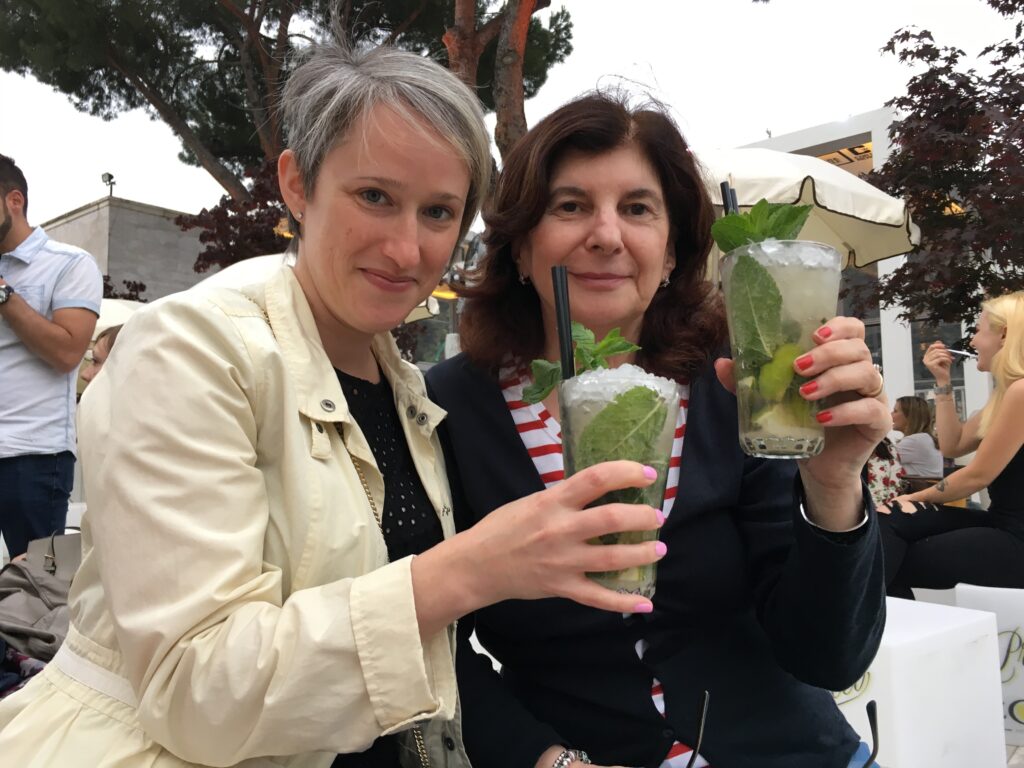
She understands me because she knows me, she’s seen what I’ve been through. I realised I could take this wisdom, this knowledge, and try to apply it to meals outside of the home. All I had to do was to be transparent about it. In this health-obsessed country, a friend’s frown is often explained by ho digerito male – bad digestion. It’s okay to talk about your poo, as long as it’s in sufficiently veiled language. Italians will go out of their way to accommodate you, you and your funky intestine, because they want you to be well when you eat their food. Food is happiness. This is the real definition of hospitality and perhaps the secret to why we love and thrive through Italian hospitality.
I am fortunate to be accepted at home, and by friends, despite my weird eating habits. And with time, I’ve realised that having IBD makes me “different” but that, in this accepting world, difference doesn’t have to mean exclusion. I don’t have to be excluded from the long table if I’m willing to talk about why I can’t participate fully in the meal. It’s not because I don’t love you back, it’s not because I don’t want to eat the pasta with my whole heart; sadly, it’s because my body won’t let me. But that’s okay.
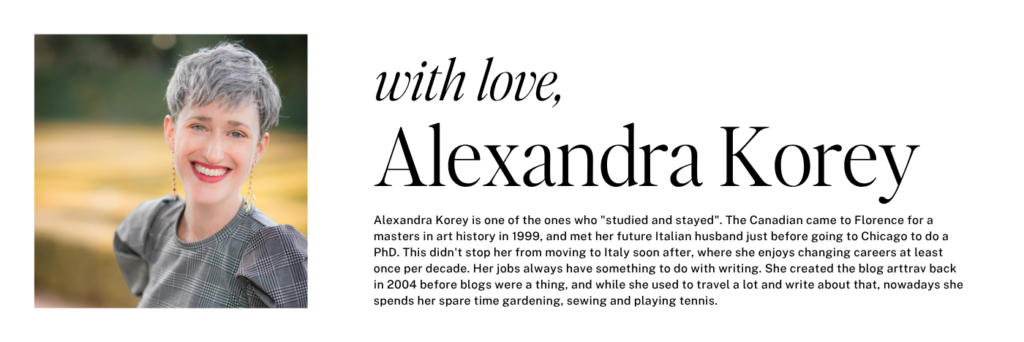
You can follow Alexandra at her website ‘Arttrav’ or on instagram

Read the Comments +