




by: Briza Datti
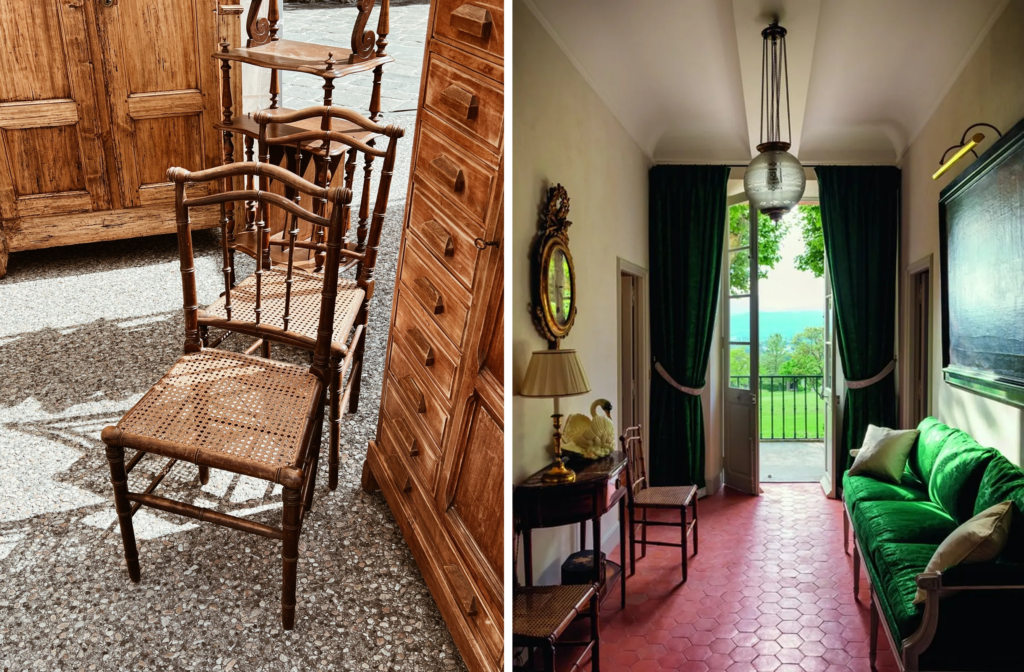
At the Lucca antique market — held the third weekend of every month, except August — I found a pair of maple ‘faux bamboo’ chairs with paglia di Vienna seats at the very first stall.
I saw them in the morning, walked the rest of the market, and came back after lunch with the thought that destiny does not pack up early. And guess what, the chairs were still there. I paid €50 each, and it turns out Christian Dior had seemingly the exact same ones.
Later, my vintage expert friend finds a photograph of the exact same chairs in the entrance hall of Christian Dior’s Château de La Colle Noire in the French countryside. I love to think that Monsieur Dior might have found his at a Sunday market too.
Flea markets are a great example of what it means to live in a society.
I am an interior designer, not an antique expert, but I have been going to markets long enough to know what they offer that no shop can: the particular satisfaction of an object that has already lived somewhere, already meant something to someone.
A clever friend of mine, who visits Tuscan country houses with inherited furniture in every room, insists there must have been an Ikea of the 1800s — every kitchen with its credenza, every bedroom its cassettone, its madia, its storage bench or cassapanca. But the difference is that solid wood was simply the standard then. Quality was not optional; it was the baseline, long before the 1980s advent of MDF (medium-density fiberboard).
If you want to know whose pocket I’d live in, it would be Matteo Perduca’s. The owner of some of Florence’s most interesting hotels, his interiors are filled almost entirely with market finds. He’s been buying this way for years, and as he puts it, ‘The allure of allowing yourself a journey back in time often involves spending less than you might imagine — and that makes the whole experience even more satisfying.'”
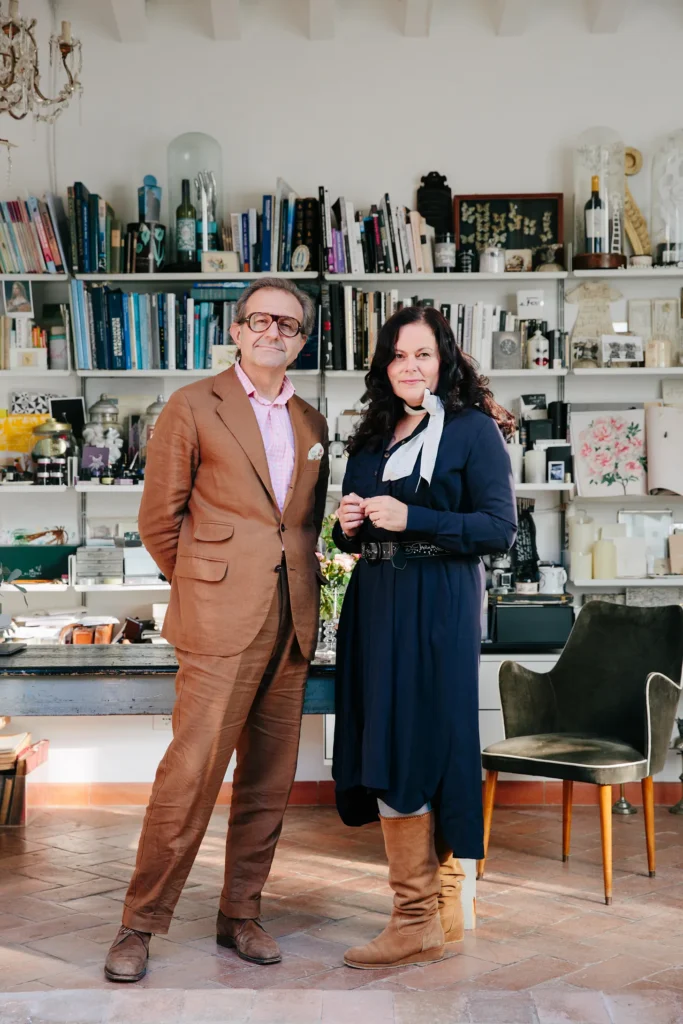
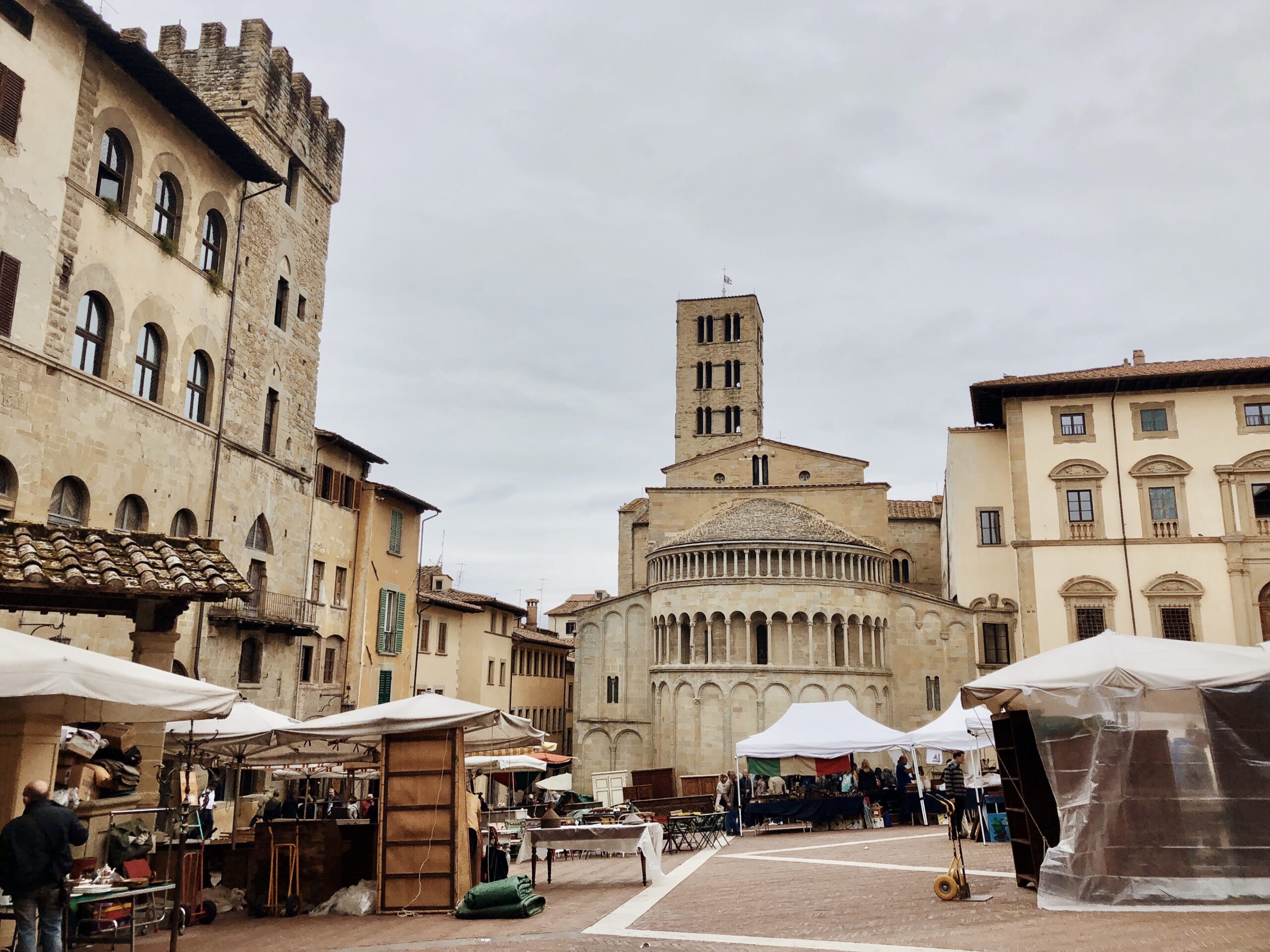
“Living in Florence, I have the calendar memorized,” Perduca says. “First weekend: Arezzo. Second: Piazza Santo Spirito in Florence. Third: Piazza Indipendenza. Last Sunday of the month: Sant’Ambrogio. Lucca runs the third weekend and Carmignano the second. August suspends the city markets; the coastal towns pick up the slack.
Beyond Florence, almost every town has its own monthly fair, its own cellar-and-attic clearance, its own second life circuit.”
The finds accumulate.
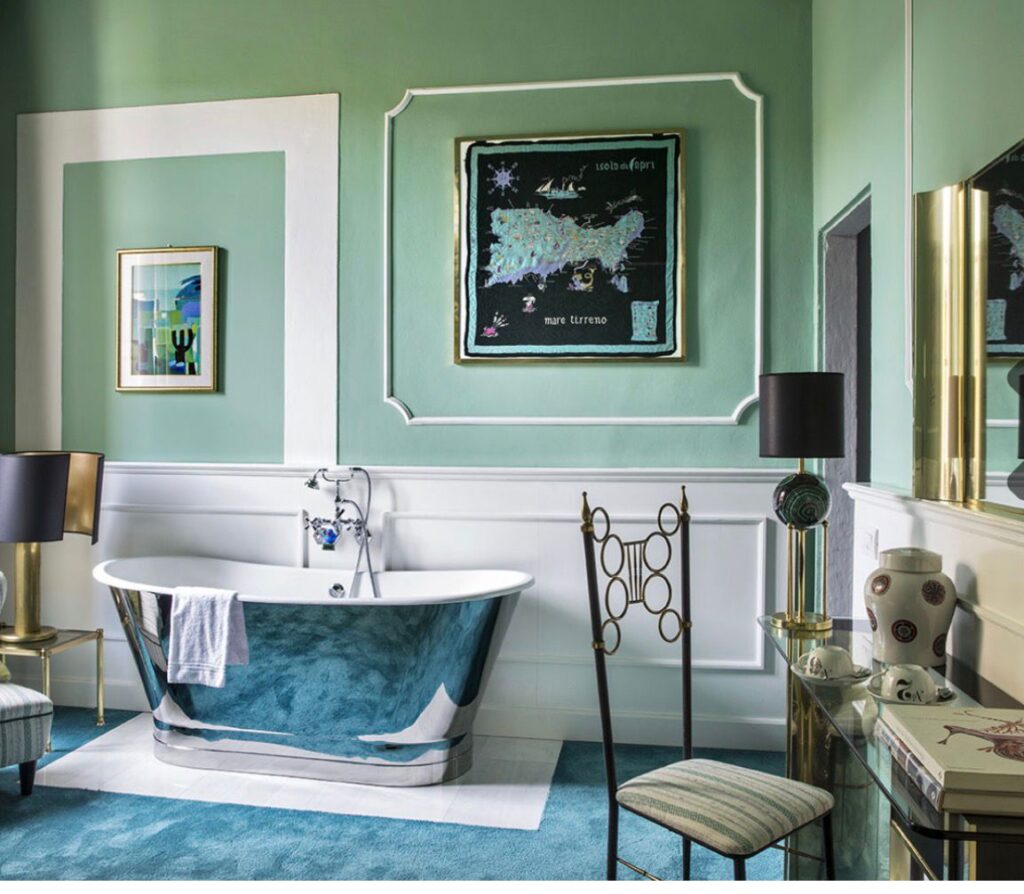
An original Emilio Pucci silk scarf — a map of Capri, designed and printed by him in the 1960s — bought at Santo Spirito for €5, now framed in brass in one of Matteo’s hotel rooms.
A Richard Ginori dining set for twelve, late twentieth century, purchased at the Arezzo market for €150. A Limoges porcelain cup at the Santo Spirito porcelain stand for €5. Richard Ginori is one I track consistently: the prices on the Ginori website make it easy to know within seconds whether something is a good deal, and at markets it almost always is.
These are not lucky accidents. This is what happens when you know what to look for, and you arrive at the opening, but it is worth noting that the tools have changed.
Google Lens can now identify a piece and benchmark its value in seconds — a practical equalizer that has given even shy buyers the confidence to make an offer. What hasn’t changed is the underlying logic.
Arrive early if the selection matters.
Ask the vendor what their best price is, rather than making the first offer. Get them talking as most people can sense when they’re being lied to, and a vendor who trusts you is worth more than a saved margin. And remember: while you are busy trying to figure out the vendor, they are doing exactly the same with you. Which is why you might want to leave the Prada bag at home.
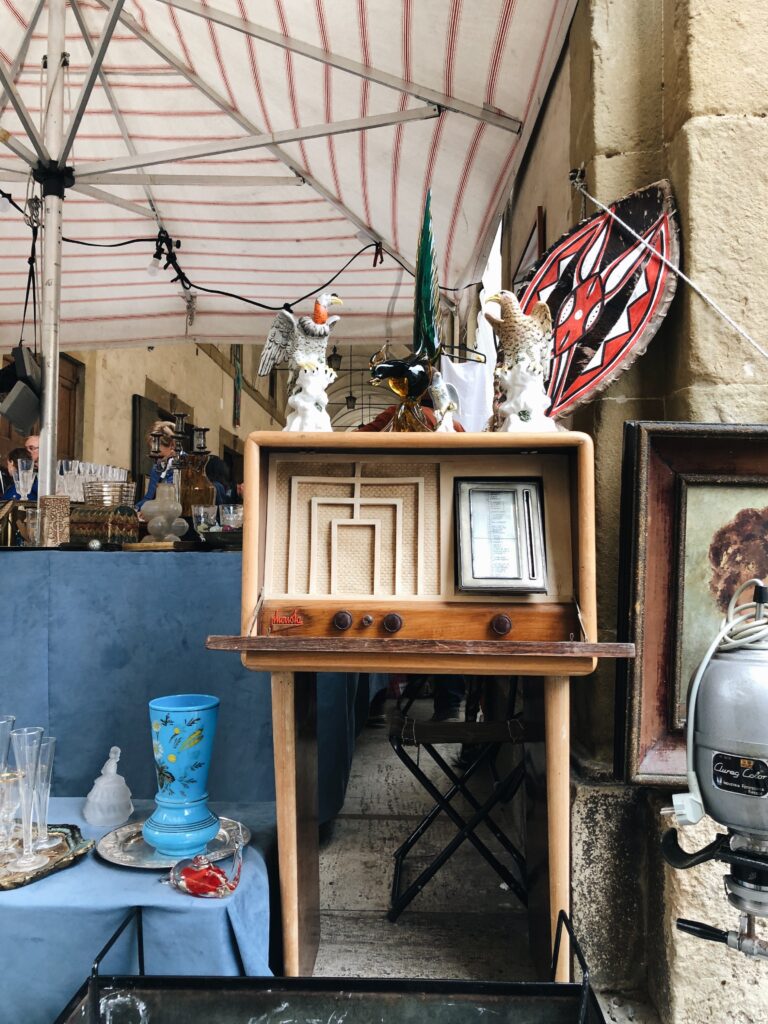
Perduca sets a price in his own mind before approaching a stall — what he would be happy to pay, considering everything. “If the asking price is too high, I immediately walk away,” he says. “If the asking price is close, I don’t negotiate. I pay.”
The relationship, he argues, is worth more than the discount. More than once, a vendor has called him when something specific came in.
It is also worth finding out whether a vendor has a shop or warehouse. “Merchants usually bring a limited quantity of their items to the market,” Perduca notes. “It’s good practice to find out if they have somewhere you can visit.”
It is also worth understanding the economics.
What sells for €100 at a market will return to circulation through a shop or gallery at double, at minimum. The one-of-a-kind pieces, above all, paintings, do not come back. Ogni lasciata è persa: anything left behind is lost.
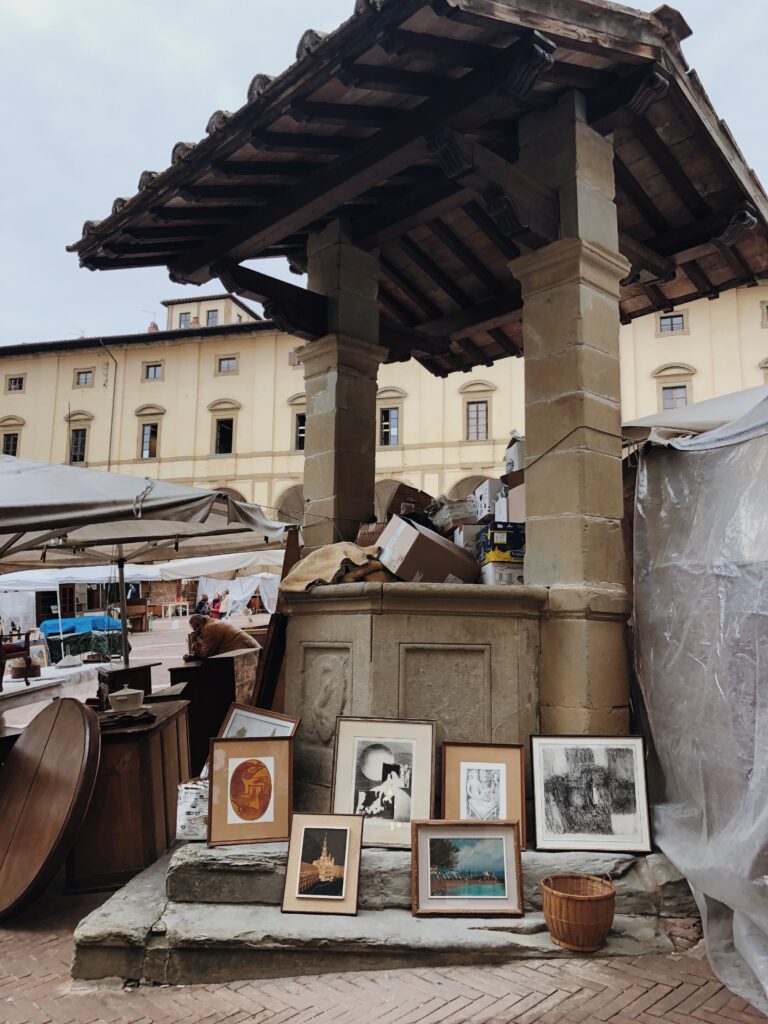
The market rewards a spirit of discovery over a checklist.
“You can say, ‘I’m looking for a coffee table,'” Perduca says, “but you might not find the exact one you’re looking for. The important thing is to keep your eyes open for surprises.”
I go in with obsessions rather than requirements, tableware above all, and let the rest find me.
If I realize mid-session that I have spent less than expected, I allow myself to spend more on something else. If I genuinely love a piece, I have never once thought twice about the price. Quite the opposite: the pieces I love most are the ones I brag about for years.
In the end, prices are shaped by timing and circumstance. Value is what you give something, and what endures.
If you want to go looking for your own find, here’s when and where to catch Tuscany’s best antique markets:
- Arezzo — Fiera Antiquaria: first Sunday of the month, plus the preceding Saturday. The largest and oldest antique market in Italy, established in 1968.
- Lucca — Mercato Antiquario: third Sunday of the month, plus the preceding Saturday.
- Florence — Santo Spirito: second Sunday of the month, full day.
- Florence — Sant’Ambrogio / Piazza Annigoni (Ciompi area): last Sunday of the month, except July.
- Florence — Piazza Indipendenza: third weekend of the month (Saturday and Sunday).
- Siena — Piazza del Mercato: every third Sunday of the month.
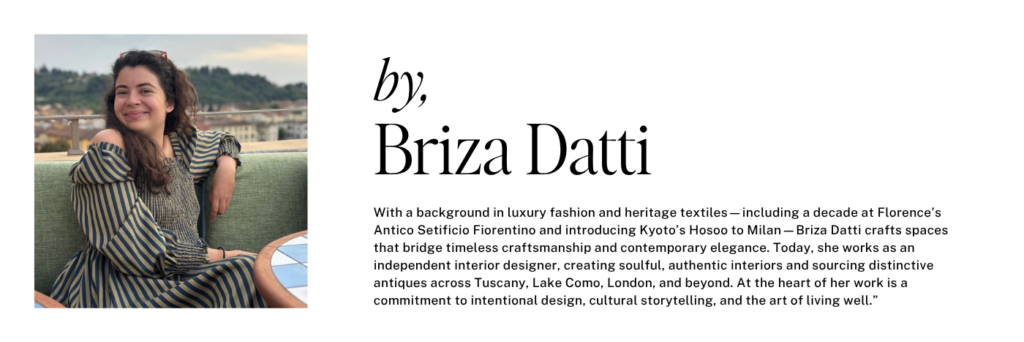
You can find Briza on Instagram.


Read the Comments +