




by: Georgette Jupe
Dear readers,
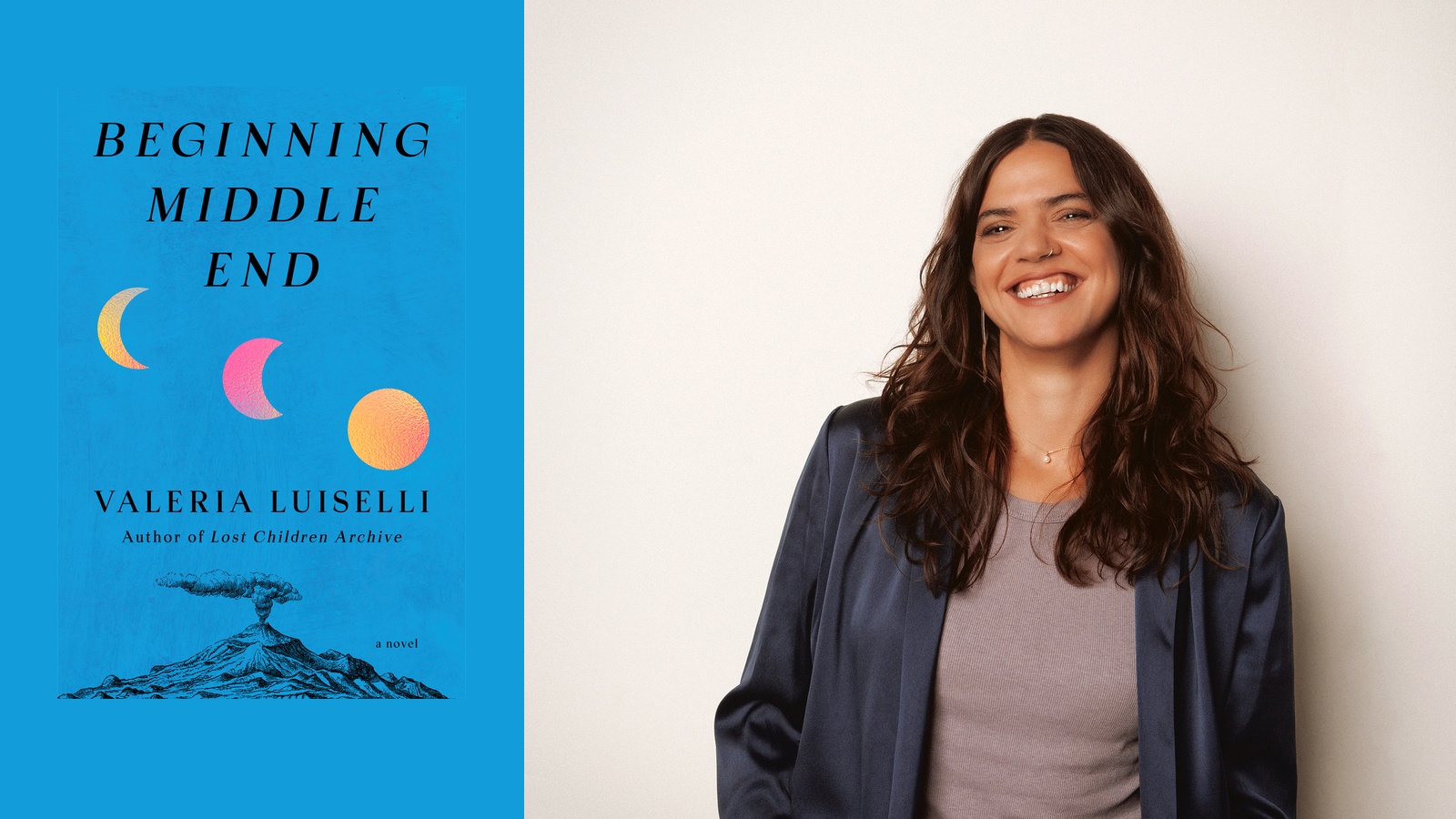
You know those rare books that linger like a faint perfume or a song you can’t get out of your head? This is one of them. Long after turning the final page, I’m still obsessively returning to my scribbled margins and well-worn corners.
If our last selection, One Italian Summer, opened the door on mother-daughter dynamics and the dizzying complexity of female identity, Valeria Luiselli’s Beginning Middle End shares a similar note but presented in an entirely different way.
It’s an immersive, sensory pulse check on human connection — forcing you to tune into every shifting mood, every sound, with a strong emphasis on symbology and history.
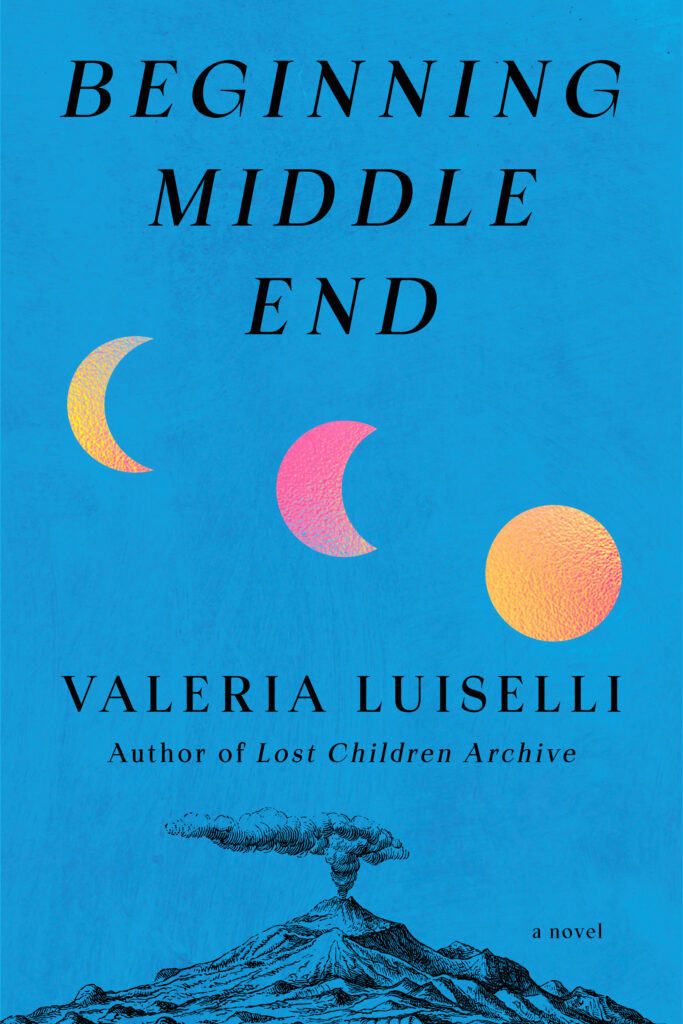
For those unfamiliar with Luiselli’s work, she has spent her career as both novelist and essayist asking uncomfortable, essential questions about how we bear witness to the world.
Here’s the setup for Beginning Middle End: A marriage falls apart and the narrator watching her own mother forget her past while her pre-teen daughter aggressively demands answers about the future, and the two of them escape to Sicily on a road trip that seemingly has no end.
Faith in human change helps the narrator process her former marriage’s subtle, banal abuse and Luiselli deliberately trades her usual specificity for broader, generalized descriptions of predatory men to emphasize how easily trust is exploited.
Ostensibly, it’s a total system reboot and a chance to reinvent themselves in a new landscape. But what actually happens is a multigenerational excavation of identity.
A grandmother’s forgotten legacy at an ancient archaeological site becomes a lifeline connecting three generations of women, forcing them to confront the query at the book’s beating heart: How do you write a second act when the first act feels fundamentally broken?
We selected this novel for a reason that will resonate with anyone navigating midlife’s particular turbulence.
Beginning Middle End is an ode to the middle. Not as a crisis to escape, but as the only place where real life actually happens.
Luiselli has said as much herself. In her own words, she wrote the novel from “that vibrant and beautiful (but also very difficult) place in time that we think of as ‘the middle’ of life: observing our children grow and carve out a place for themselves in the world, while our parents slowly lose a grip on their memory and their sense of place. A question that guided me through these years of writing Beginning Middle End was how it is that we can hold the memories of those who leave, and at the same time step aside and gently witness how our children begin to articulate their own memories and imaginations.”
It refuses the neat arc of redemption or reinvention..
What I appreciated about this (as someone who is most definitely in the middle of her life) is how it leaves you in character’s inner thoughts. There is a slow accumulation of small moments that somehow add up to a life, even when we can’t yet see the pattern.
Pliny as Guide
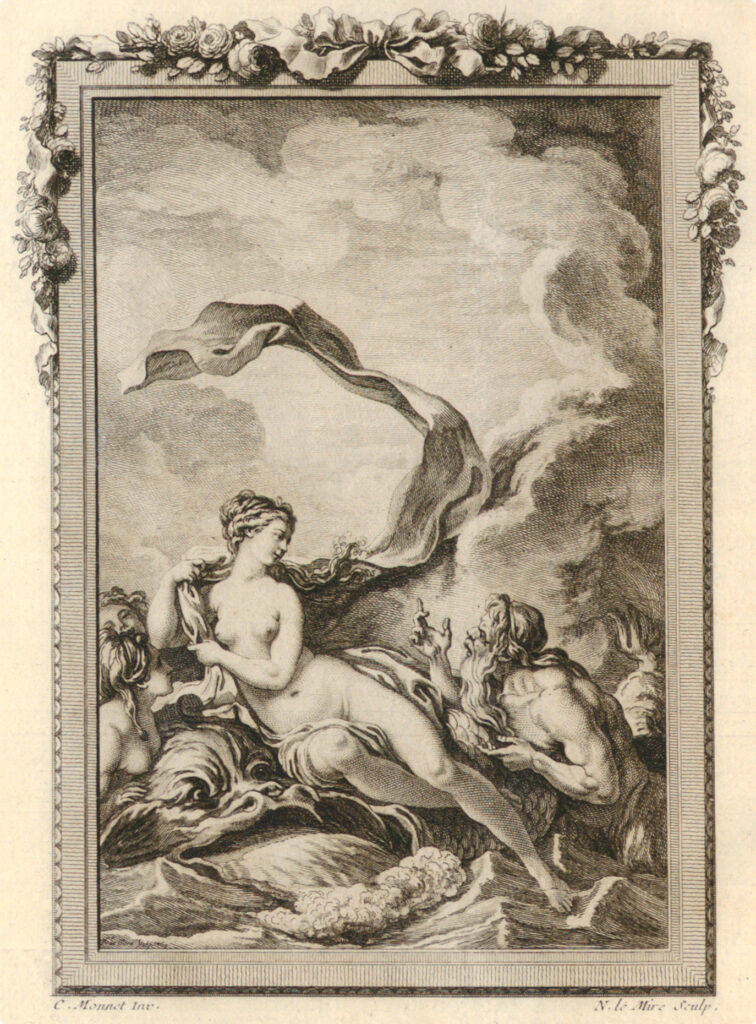
Another thing to note about this book is that Luiselli weaves symbols throughout. Think of the obsession the daughter had to return the mosaic featuring Proteus, the shape-shifting Greek god or the many references to Pliny the Elder that go through the entire narrative sort of as a ghost-guide. Pliny’s 37-volume compendium of natural observations becomes a mirror for the novel’s own project: bearing witness to the world as it is, without mythology or scaffolding, simply trying to make sense of it.
There is something purposeful in this choice.
He was a Roman naturalist who died trying to rescue others and a man who looked at the world and simply wrote it down. And now, a contemporary mother struggling to understand her own history, her daughter’s future, and the vast territory between memory and imagination — finding in Pliny a kind of companionship across centuries. It’s a novel about how stories shape us and how we situate ourselves deeply in the world while accepting our transience in it.
The Sicily setting carries its own weight here.
Volcanoes, winds, waters, not mere backdrop but active presences. There are moments where it is devastating reading a novel grounded so firmly in place and climate while the world itself seems to be remaking itself through fire and storm. The novel doesn’t turn away from this. It lets it in.
The Architecture of Fragments
Luiselli builds this story from discrete parts. Polaroids, postcards, fragmentary prose separated by subheadings, much like the ancient mosaics that appear throughout. It’s a method that mirrors her working process itself, that shortens the distance between how a book is made and what we finally read. This matters for so many reasons. In a novel so concerned with how we transmit stories across generations, the very form it is presented becomes part of the message.
And then there’s the daughter. Without spoiling the architecture of the narrative, we’ll say this: the final section of the novel hands the storytelling reins over entirely, and in doing so, reveals something we couldn’t have seen from the mother’s perspective alone. It’s a reminder that the stories our children tell about us may be the truest ones.
For the Restless Middle
Back to the parallels between Valeria and Rebecca’s books. If you’ve ever wondered what your mother wanted for herself before motherhood arrived. If you’ve felt the weight of holding your own daughter’s future while watching your mother’s past slip away. If you’ve stood in Sicily, or wanted to, and felt the pull of ancestors you’ll never fully know. If you believe that the interesting part of any story is the middle, not the beginning or the end.
Then this novel is for you.
And the timing could not be better. With Christopher Nolan’s The Odyssey making us all more curious about mythology Beginning Middle End walks straight into that conversation from a completely different angle. Our own discussion of the book kept circling back to myth: the Trojan Women, the shape-shifting Proteus, whose mosaic anchors the entire novel, Narcissus, and the older creation myths underneath all of them. Luiselli isn’t retelling any of these stories so much as asking what we do with them generations later, once they’ve been buried, half-forgotten, and finally dug back up. Mythology is clearly having a moment this summer, and this is one of the more interesting entries into it, less spectacle, more excavation.
We’re curious to hear what resonates. What questions it opens up. Whether Pliny becomes your ghost-guide too (I did my own fair amount of deep diving as soon as I finished the book!)
One essential companion piece you absolutely cannot skip: the soundscapes. Luiselli and her partner actually recorded field audio in the exact Italian locations woven throughout the book. Put on a good pair of headphones and listen while you read, it completely elevates the experience, wrapping you in the actual ambient hum, wind, and voices of the landscapes on the page. It’s brilliant, immersive storytelling at its finest.
Xoxo Georgette
Ps: Let’s continue the conversation on our dedicated Vivace Community Space here!

Read the Comments +