




By: Laura Thayer
So much about moving to and living in another country is about adapting. You learn the daily habits and rhythms of a place, a new language and culture, perhaps even a different way of cooking and eating. Somewhere along the way, you’re also learning who you are in this new place. After nearly 20 years in Italy, with a lot of adapting along the way, what has emerged for me is a sort of in-between—two cultures, two languages, two places—that has become its own type of home.
Living between places changes the way you see both of them. But what if that in-between space becomes not just where we belong, but also where we create from?
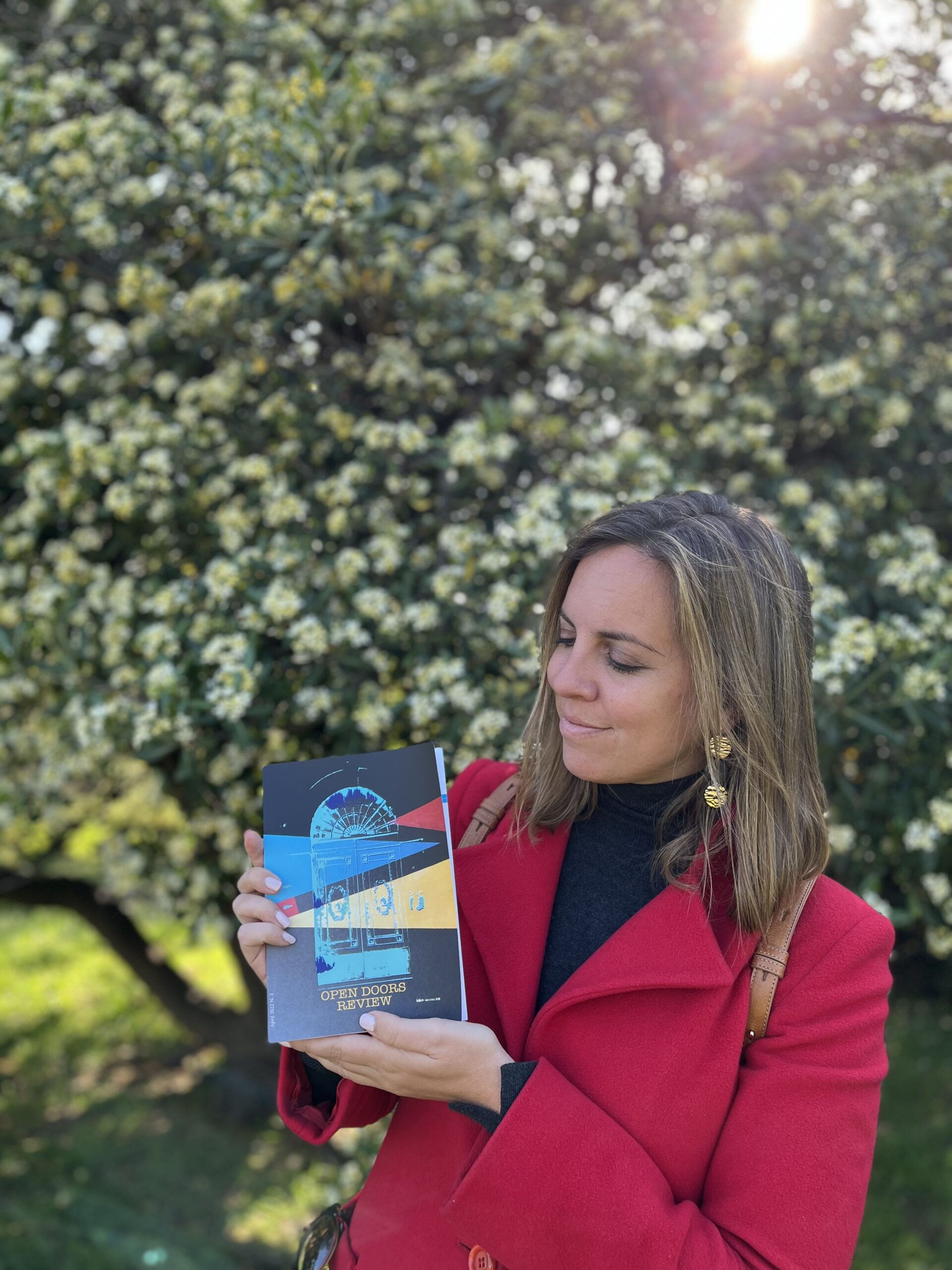
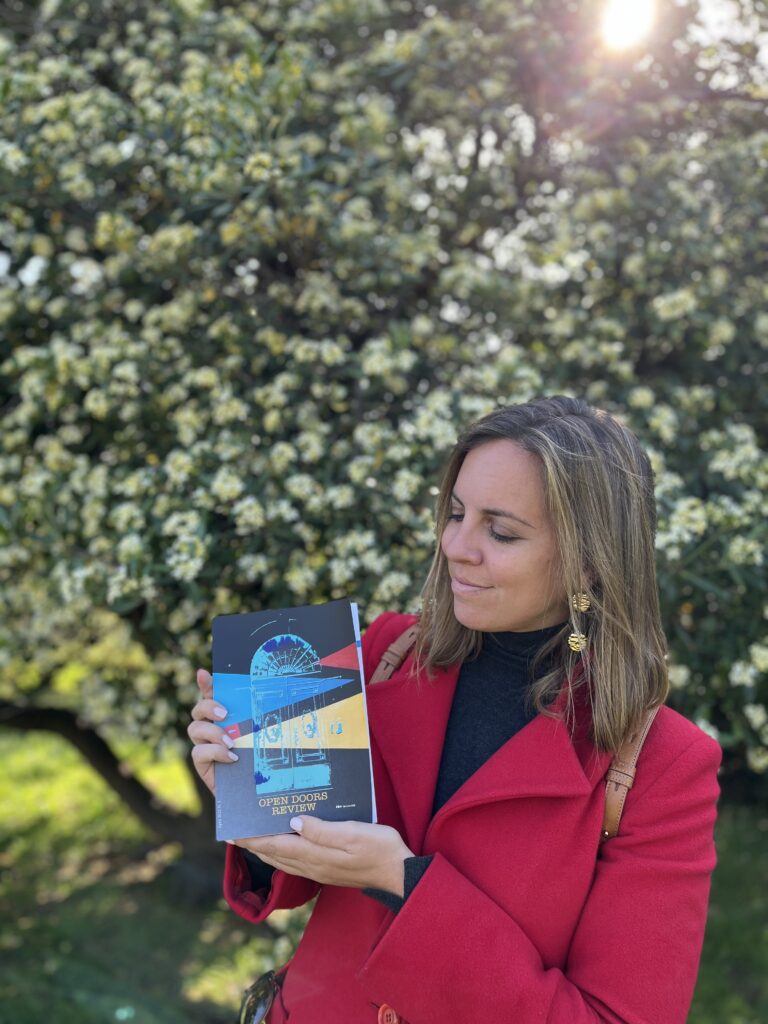
That idea is one of the things that drew me to the writing and work of Lauren Mouat. An American writer who has lived in Italy since 2010, Lauren is the author of Intermezzo, a bilingual collection of short stories published in Italian and English, and the founder and editor in chief of Open Doors Review, a bilingual literary and arts magazine. She is also a founding member of the Florence Literary Society, a professor of travel writing in Florence and a licensed Italian tour guide. What connects so much of her work is an openness to this in-between. Rather than seeing a life lived between languages and cultures as divided, Lauren’s writing and creative work suggest how expansive that space can become.
After my last Women Writing Italy column looked back at the nearly forgotten Victorian-era writer Julia Kavanagh, I wanted to turn to a woman actively creating space for literary voices in Italy today.
This conversation began as a series of written questions, partly because, as you’ll read, I caught Lauren at a particularly busy creative moment in her life. But when her answers came back, they were so thoughtful and full of ideas about writing, language, creativity, and building a life in Italy that it felt important to share them more fully with Vivace readers, in her own words.
What first brought you to Italy, and what kept you here? Did writing develop as your path after coming to Italy?
Writing was actually a big part of my decision to move to Italy in 2010. I had done a semester abroad in Rome as part of my university studies, and I experienced a feeling of homecoming I’ve never been able to explain. I have no Italian ancestry, I’d never been to Italy before, and I didn’t speak the language, but I felt at home in Rome in a way I had never felt in the U.S. For this I blame all the English literature I read as a child. I just longed to move to Europe!
I was also imagining what life could look like after graduation, and I knew writing had to be a primary consideration. I can’t remember a time when I was not interested in reading and writing. I completed my first story at ten years old (a sort of retelling of The Polar Express!), and I had the distinct feeling even then that I was extremely behind on all the stories I had to tell. It’s a feeling I’ve never shaken off. I’ve always felt behind in the writing I want to get out there.
As I was looking at the post-graduation world, I was seeing people get internships and look for those stable Monday-to-Friday jobs, and I felt that kind of lifestyle would hinder my writing. I had no examples of how to be a professional writer, except perhaps as a journalist, but that didn’t interest me in the way being a fiction writer did. In a way, Italy was a place where I had no blueprint, no script, no rules. I thought this was where I could create the writer’s life that felt impossible back in the U.S.
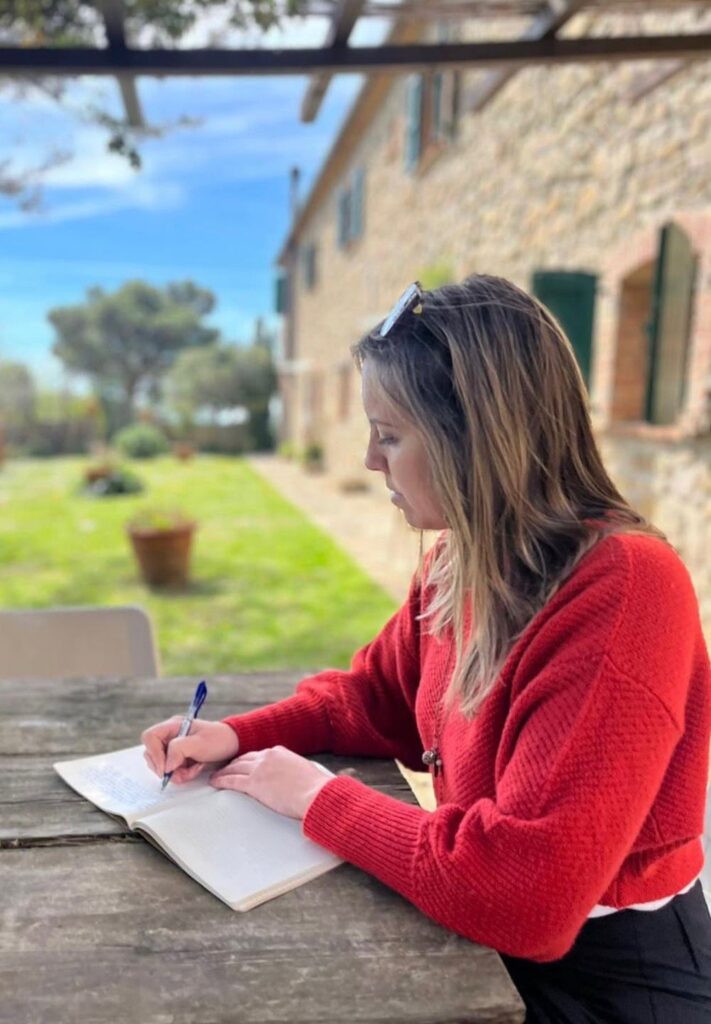
I now believe you can make the life you want anywhere, but at 22, it felt like being in Italy would give me more opportunities to be a writer. I also needed experiences. I’d grown up in California and experienced school, high school, and university. Moving abroad with no job and no language skills … it certainly gave me some material!
How do you see Italy as part of what you’ve created? Could you imagine this literary life elsewhere?
I was hungry for experiences when I came to Italy, and anyone who’s come here knows the way to make it work: saying yes to every opportunity, hustling, making a patchwork of different jobs, and meeting new people. You don’t have a support network, you don’t have familiar language or cultural touchstones. You feel totally alive, and it’s also exhausting! You’re in a constant state of evolution when you move to a new country.
I think I would have made a literary life elsewhere in one way or another, but it’s hard to imagine what that would have looked like. I graduated college in May of 2010, and by August I had moved to Rome, so my experience of life in the U.S. is largely limited to childhood and school. Italy is so much a part of who I am and who I’ve become over sixteen years of living here. I’m made up of pieces of America and pieces of Italy now, so those come through in the writing.
Why was creating a bilingual space important for Open Doors Review and Intermezzo?
I think anyone who lives in a foreign country, between two languages, has a special relationship with both of them. I write in English, but part of my identity is also in Italian now, and many of the people in my life are Italian, of course. So when I was putting together Open Doors, part of the reason was to create a literary space open to both languages.
A kind of rule for me is: if I’m experiencing something, so are other people, and if I’m craving something, it’s likely other people are too. Open Doors can be for someone who writes and reads in English or Italian, or, like me, a bit of both. It’s also for anyone who is curious about the act of translation, which I think is a very important human endeavor that needs to be preserved in this new AI age.
As for Intermezzo, all the pieces were written in English, but I wrote them while I was in Italy. I had the experience of meeting Giovanni De Mauro, the director of Internazionale magazine. He was working with Jhumpa Lahiri on her series of essays at the time, which would later become her dual-language book In Other Words. He made me really think about this idea of existing within and between two languages.
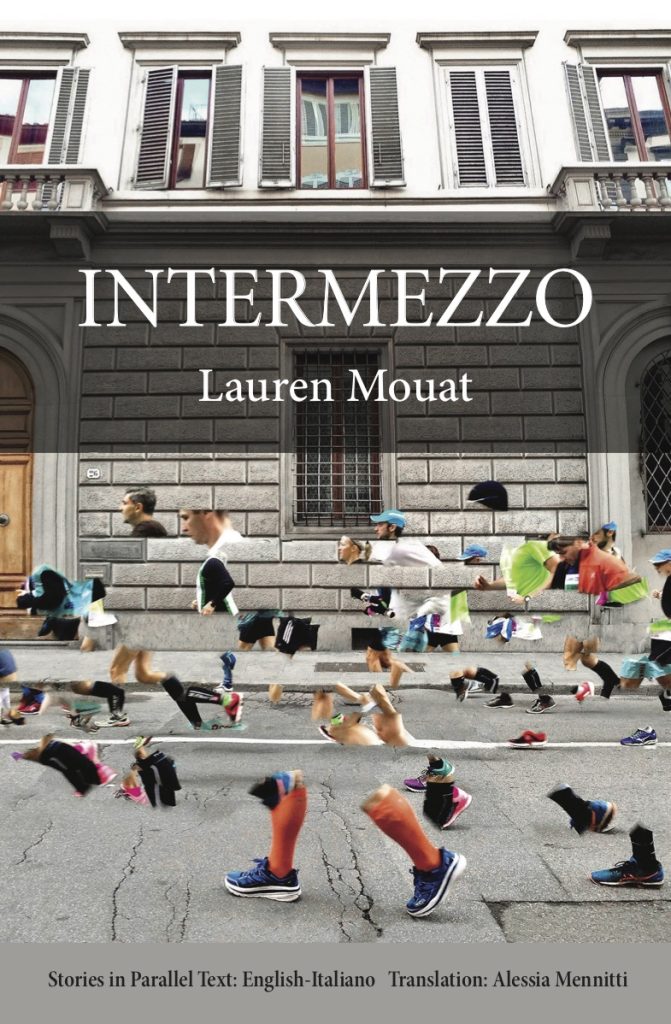
My book doesn’t deal so much with language, but with the feeling of being between places, and I certainly feel like I live between English and Italian. If my book was going to be published in Italy, I felt it had to be in both languages. This wasn’t something the editors at Ali Ribelli Edizioni thought was necessary, but I insisted! I think the format of a book should also reflect its themes, and that’s what Intermezzo does. Even if you only read one of the languages, you’re reminded that the other one exists right alongside the first.
Can you share more about the “intermezzo” or in-between liminal space you describe, and the pleasures and challenges of creating from it?
I think we spend most of our lives in the intermezzo. We’re always unbecoming and becoming, whether that’s through different stages of our lives, new relationships, or new experiences. We’re constantly letting go of old things and taking on new ones. So I think the in-between is really where we spend most of our time. Even though we like to say definitive things like “I am a teacher, I am a woman, I am a parent,” for example, I don’t think our identities are as fixed as we pretend they are.
I think that state is perhaps more obvious if you’re living in a foreign country. You’re constantly reminded of how you belong and don’t belong, and it can happen in the same five minutes.
I also have the unique experience of working as a tour guide in Italy. I meet Americans and feel that sense of a shared home culture, and then a few sentences later I can feel completely alien to it. I’m also interpreting Italian culture for them. So I’m constantly engaging with my Americanness and my sense of otherness from America, as well as my role as an interpreter of Italian culture and history. There’s a lot of shifting sand under my feet, and I’m engaging with the why, the psychology, and the cultural differences all the time.
I think this is really helpful for creativity because change is essential to creativity. Flexibility is essential to creativity. Observation is essential to creativity. And being in the middle, you’re constantly observing, making sense of things, and not taking them for granted. That kind of observation is what really brings writing, or any creative project, to life.
What sparked Open Doors Review, and how has it grown?
I’d been working as a tour guide, getting my license, and starting a tour business with my partner, and I felt like I didn’t have any time to write. I really missed that part of myself. Then COVID came along, and I immediately started writing a novel. I wrote the entire 100,000 words of an extremely messy first draft, then got completely stuck in the editing process and couldn’t move forward with it. I decided instead to start putting together the short stories for Intermezzo, which was all editing rather than drafting from scratch.
When it looked like we were heading back into lockdown in the winter of 2020, I was filled with panic about what I would do with that time and how I would survive it. I’d always had writing groups in Rome, but I’d just moved to Livorno, and I didn’t have a writing group there. Even if I’d still been in Rome, you weren’t really allowed to meet with people, and everyone from those old groups was scattered. So I started looking for a magazine in Italy that would publish short stories and also have a bilingual element, and I couldn’t find one. I thought, “How hard can this be? I’ll start Open Doors Review.”
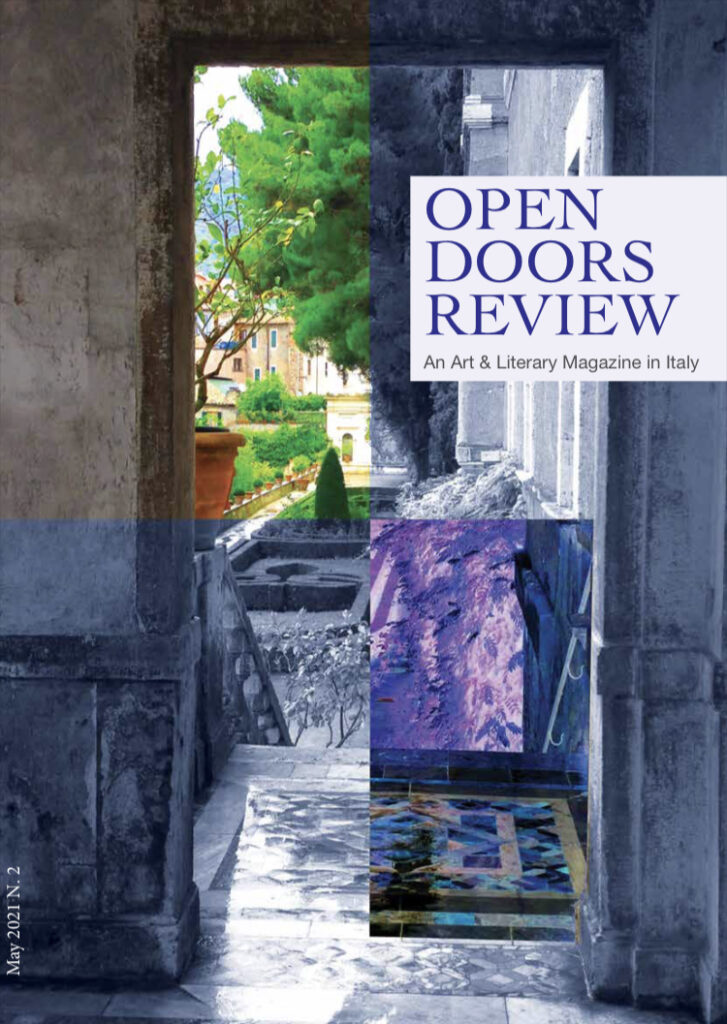
So, in a moment of isolation, I was seeking community. I assumed members of my old writing groups would submit, and maybe we’d have a little zine. Instead, there was that very particular COVID moment when everyone was living entirely online, and word about Open Doors spread via social media in a way I don’t know if it could spread so easily now. Submissions came in from around the world. Complete strangers were submitting, and I was shocked, surprised, and excited by that. It seemed like other people were craving that bilingual space too.
Another important part of Open Doors for me is creating a contemporary creative showcase. Italy has such a rich history of art, architecture, and literature, but I wanted to see what creative people today are writing about. You don’t have to live in Italy to submit work to Open Doors Review, but we ask contributors to share what their connection to Italy is. Reading those bios is truly one of my favorite parts of Open Doors—just seeing the range of where people are writing from and how they connect to this country.
In the five years since it launched, Open Doors has grown to include a regular team of readers, interviews with Italy-based artists and writers, and a book club where we read Italian books translated into English. That project is a collaboration with Alexandra Lawrence, and people join our online discussions from Italy, the UK, the U.S., and even South America. Personally, Open Doors has allowed me to meet so many incredible people and feel part of a world of writers and readers. We hear all the time that reading is dead and AI will do all the writing. If you’re involved in a literary magazine, it’s just obviously not true. So many people are writing.
What has the Florence Literary Society brought to your literary life in Italy?
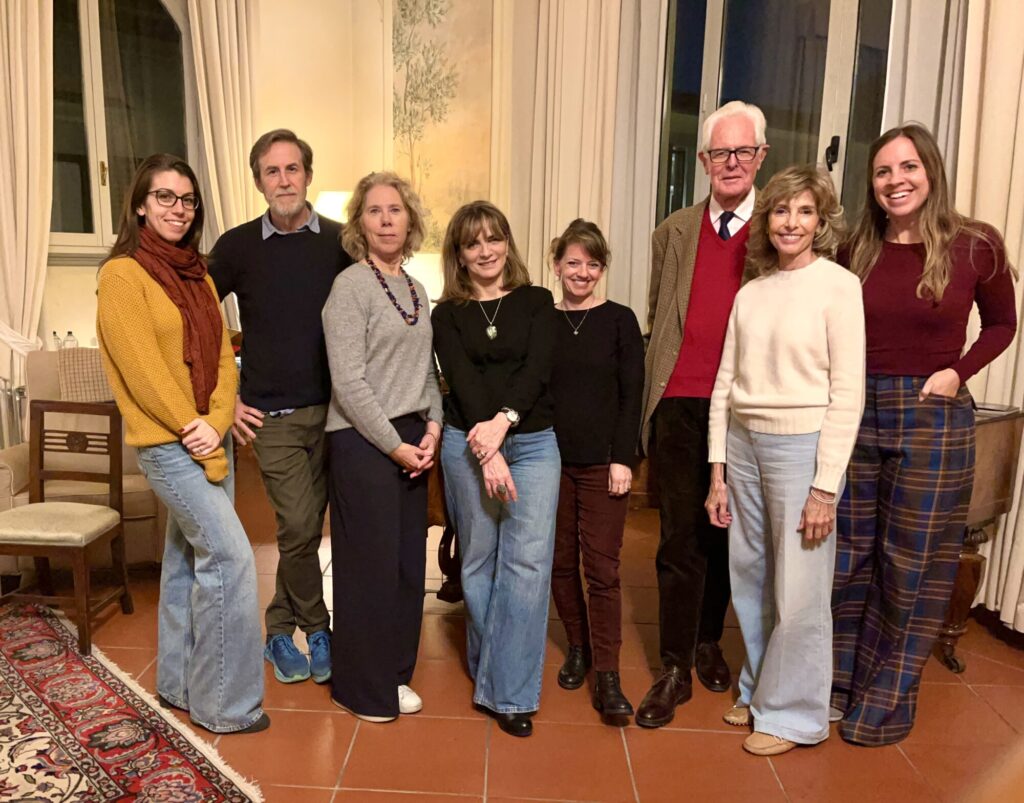
The Florence Literary Society has been an incredible experience. I love a good community group project, and the people who’ve created it have felt like finding my people. They care about building this community as much as I do, and they care about creating these events. We all genuinely share the same goal of connecting with other writers. The community response has been so heartening.
We’re putting on our second Publishing Day event in November, so I’m really looking forward to that and to meeting those international experts!
What are you working on now?
I’m working on the novel I started during COVID. I had to set it aside for years, and I published Intermezzo and started Open Doors in the meantime, but now I’ve come back to it. I’ve been working on the novel through a master’s program at the University of Lancaster, which wraps up in two weeks! It’s about what belongs to us, what we inherit, and what forms us. The main character has ties to both Italy and America, so it deals with many of the themes that have come up here. There’s a bit of Italian history, a bit of the art world, some coming of age, love, responsibility, and longing. I’m still working on how to describe it, as you can see!
I also have a new Substack series coming out soon about becoming a professional tour guide in Italy. I started tour guiding here in 2013, and I don’t think I could have chosen a richer career path in terms of observing cultures, observing my own country from afar, seeing my home country through the eyes of other Americans, learning Italian history, and jumping through bureaucratic hoops … It’s been such a ride, and there are a lot of tales to tell!
You can follow Laura’s work on her Substack “Ciao Amalfi” or Instagram.

Read the Comments +