


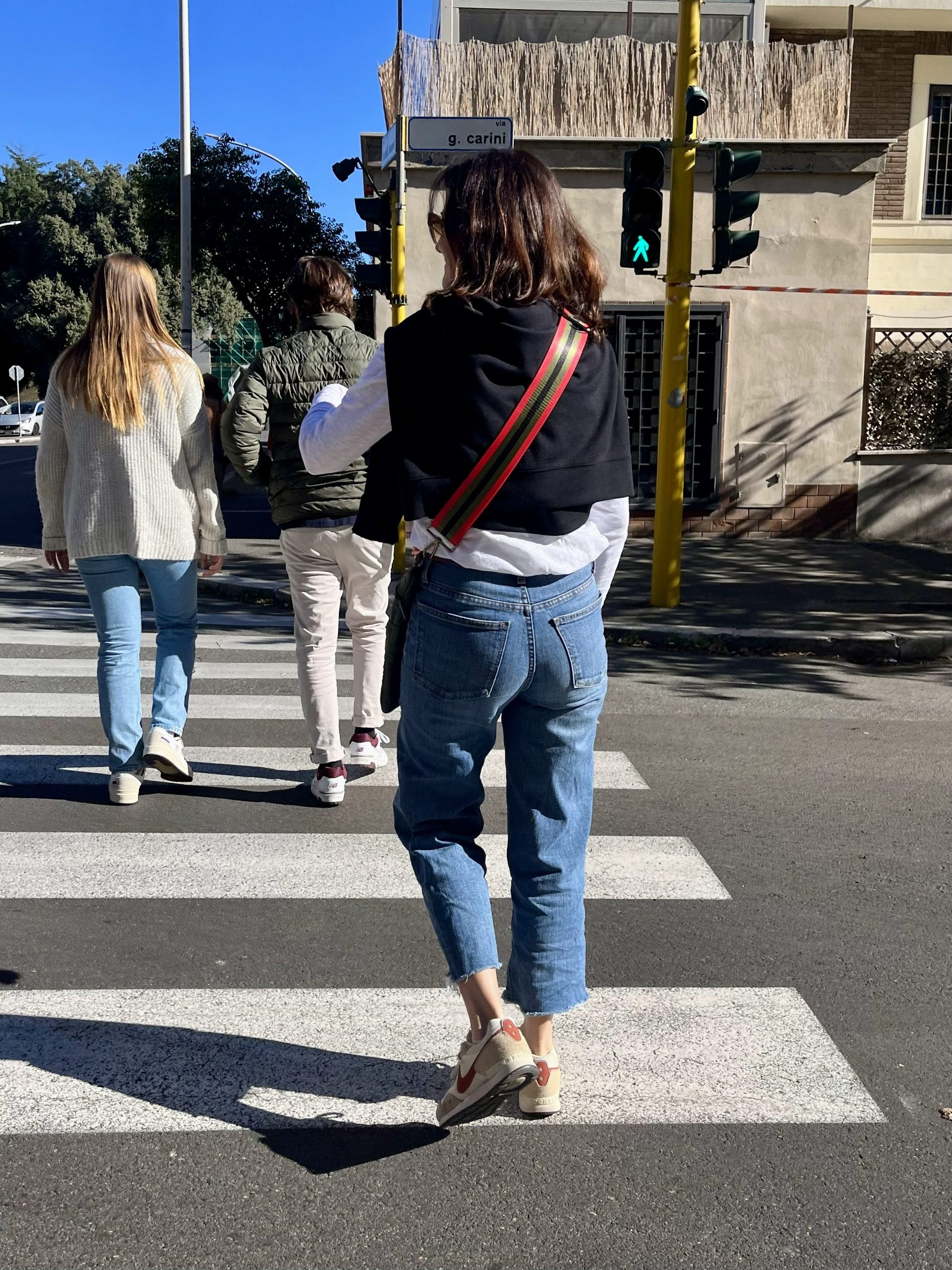


by: Gabriela R. Proietti
It’s hard to predict the weather when living or traveling throughout Italy come fall. As summer has officially faded behind us but the heat seems to linger longer and longer, year after year, getting dressed (and packing), becomes almost as unpredictable as Mother Nature herself. One day calls for a jacket, the next jumping into shops to dodge spotty storms, and later wondering why you ever put away your sandals from the past season.
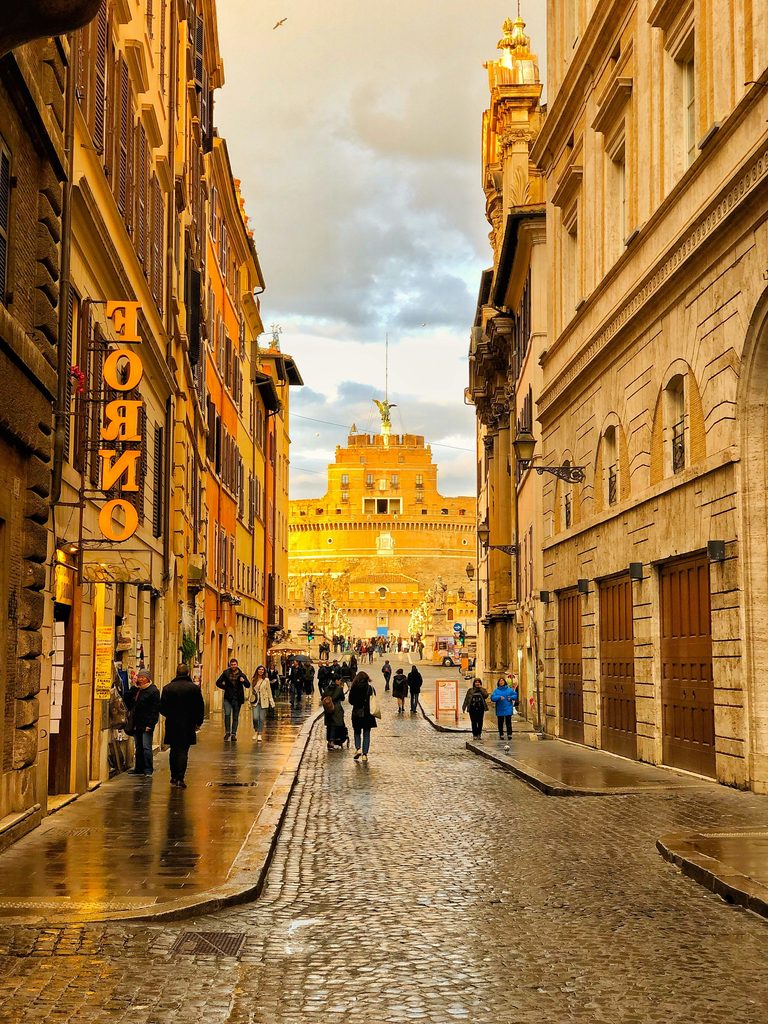
While October was once synonymous with mild days and lingering sunshine, particularly in Rome, where the ottobrata romana has long been celebrated for its glorious, day-time stretches of warm, golden weather, October no longer has such a predictable pattern.
It may be the oldest trick in the book, but layering becomes essential for navigating the in-between season — whether you’re wandering through Florence following in the footsteps of Renaissance artists, chasing those one-upon-a time ottobrata Roman days, or exploring Puglia’s whitewashed villages. The Italian approach traditionally dresses for the season, but about having the right pieces at the ready: layers that can be added, removed and rearranged as the day unfolds, seems to be the better strategy of the two.
Start with a basic base
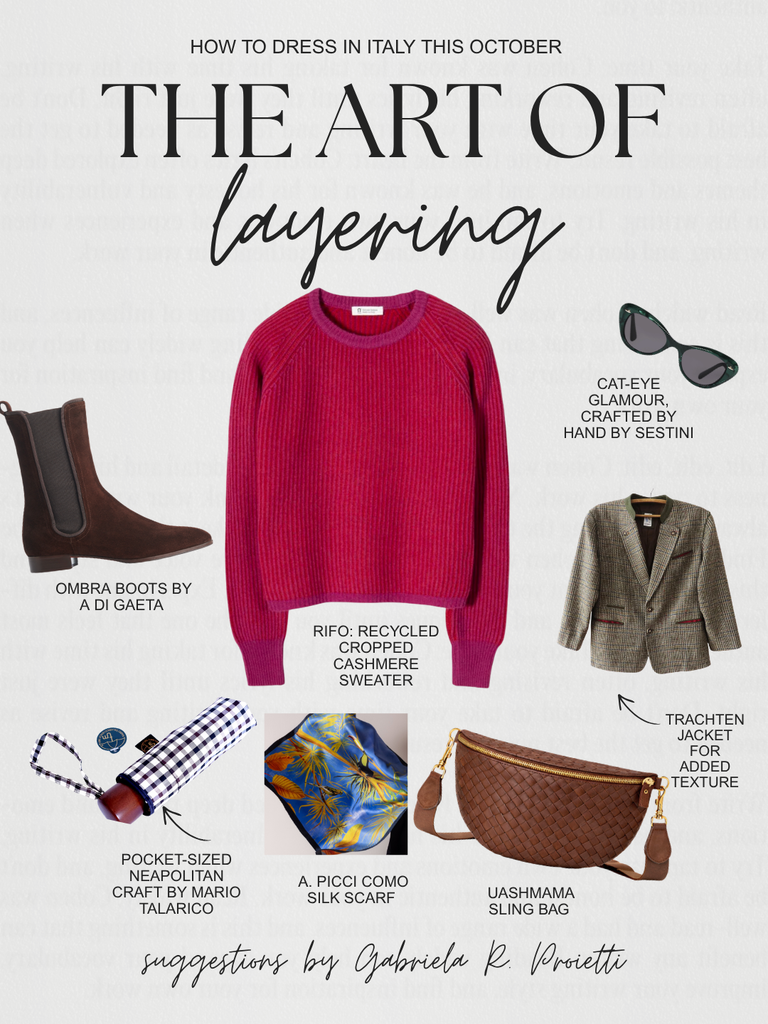
It sounds basic to say “rely on those closet, wardrobe basics” but like those “rientro” looks to end of end the summer wardrobe, the best step into the fall is with a handful of quality cotton t-shirts that are the building blocks for layering. Long sleeve, short sleeve, and all the quarter-sleeves in between, check the composition of the shirts that make them breathable for those mid-sunny days when the layers need to be peeled back (and off). If you’re looking for an Italian brand that sells quality basics that are Vivace approved, Rifò Lab is based just an hour-ride outside of Florence that focuses on discarded, upcycled fabric.
For bottoms, denim jeans or trousers work, especially for church and cultural site seeing–keep it below the knee.
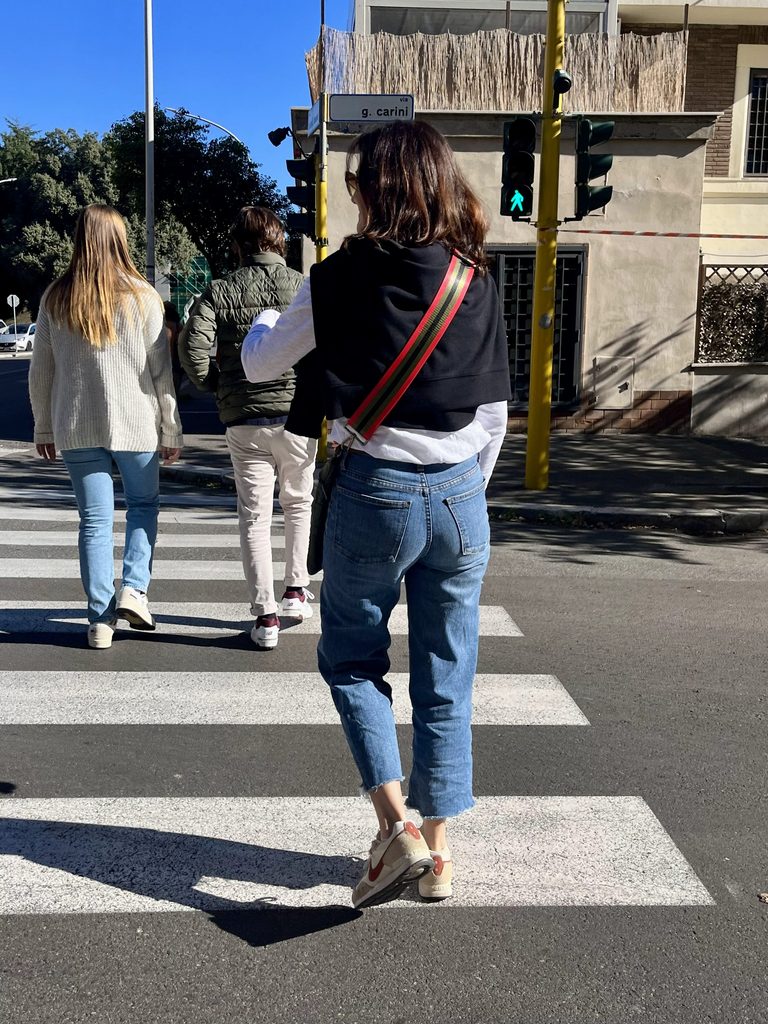
Get playful with the shell of the outfit
Once the base is sorted out, this is when getting dressed feels more personal and fun. October leading into November in Italy are the two-month excuses to wear transitional pieces that don’t always have a place in the early or ending days of fall.
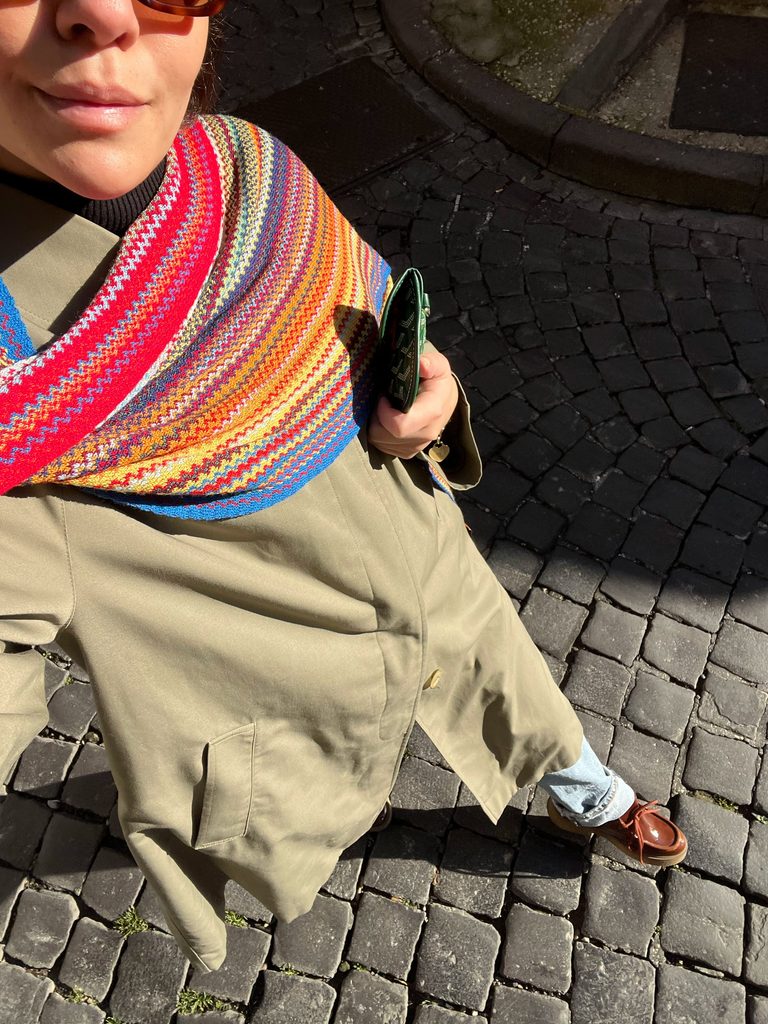
The Italian approach to layering is less about piling on piece after piece and more about building an outfit that can be both adaptable and functional. Think of the base as the foundation, and the layers on top as the pieces that give the outfit its personality. A classic T-shirt and trousers can become something entirely different with a wool sweater draped over the shoulders, a scarf tied around the neck or waist, or a classic button-down, even better if it comes from an Italian sartoria, worn open for a relaxed feel. Italian style jacket-adjacent pieces during this season favors trench coats, blazers, and second-skin leather jackets.
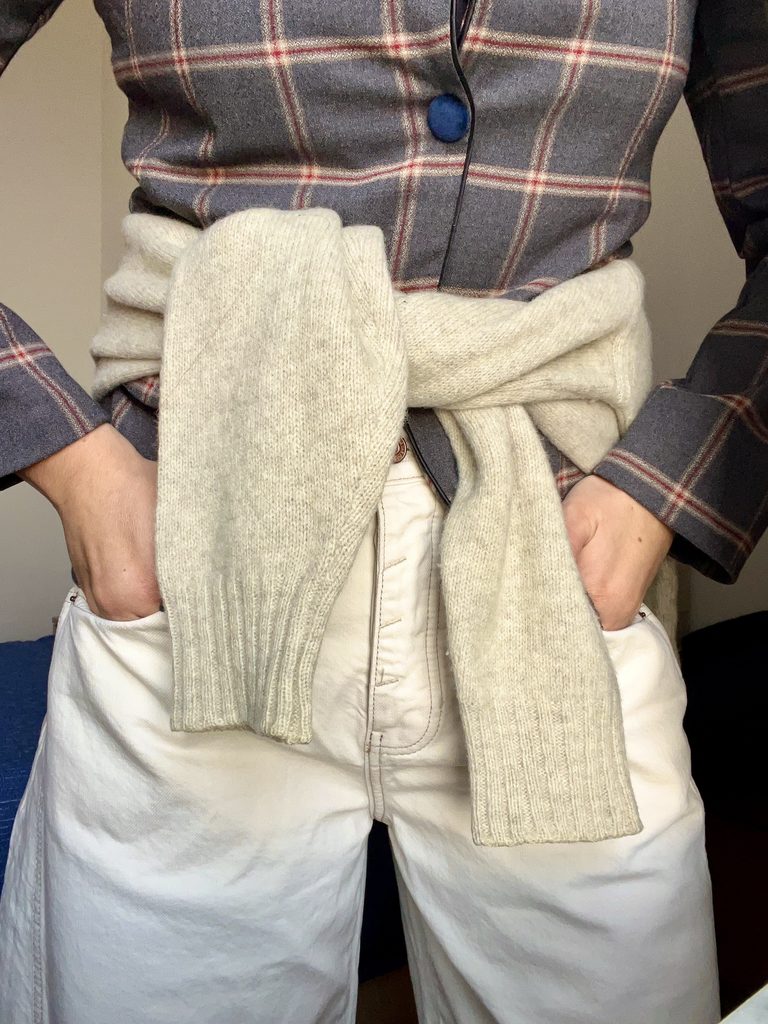
One of my favorite finds to look out for are Austrian, South Tyrolean blazers called trachten jackets, which you can often scope out at flea markets and vintage fairs around Italy. They’re structured but not overly formal, collarless but quality compositions, and their playful buttons and colors adds the perfect punch. Plus, they add a little more personality than your standard blazer blazer.
Layer-up those accessories
Both functional and layerable accessories do the talking in the upcoming months. For one, Italians love a pair of sunglasses, no matter if it’s December or October, and there are plenty of independent designers for Made in Italy glasses, like Sestini, founded in Tuscany. For rainy days, consider bringing an umbrella, or if you’re headed to Naples for a day of fried pizza and a dose of football legend, Diego Maradona, take a stop at the city’s very own umbrella-making shop called Mario Talarico.
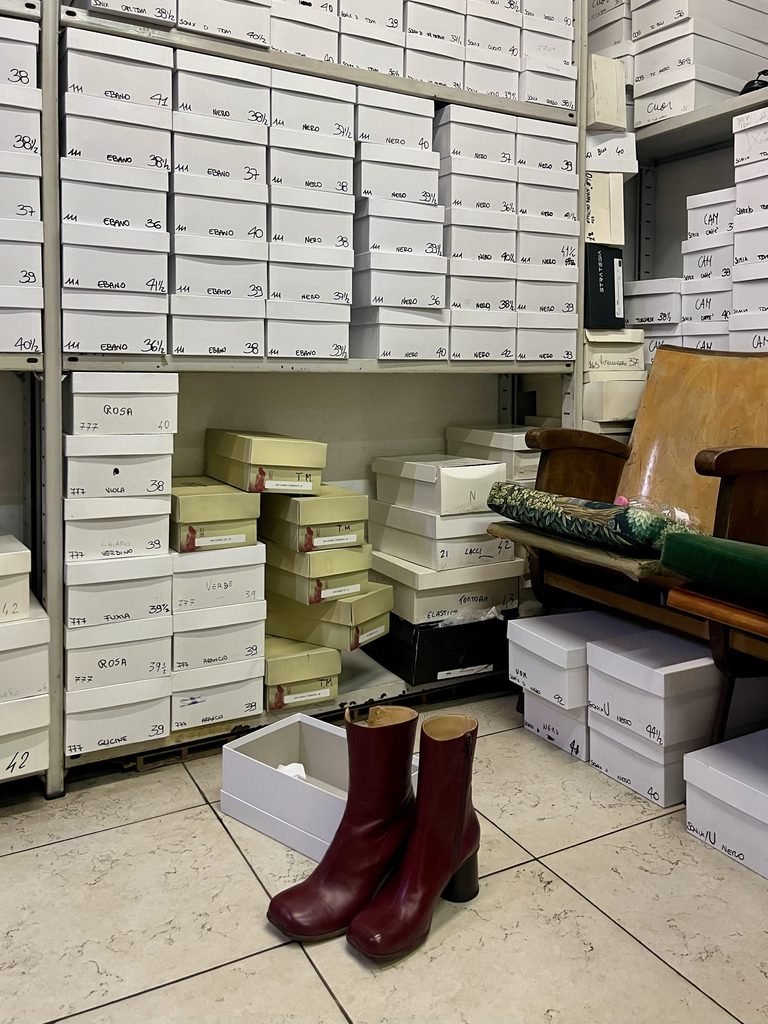
For functional footwear, focus on something that can carry you through both sunshine and sudden chill. Leather loafers, ballet flats, and sturdy leather boots are all Italian, footwear-forward options that can be dressed up or down. For an artisanal brand in Rome try Borini Roma off the main drag of Campo dei Fiori or A di Gaeta in Milan’s haute couture district. Much of Italy’s silk hails from Como, so a stop at A Picci is obligatory for a silk scarf. For a crossbody bag that is both functional, stylish, and layerable, stop by Uashmama shop in Florence (everything is 100% Tuscan and made with durable, washable paper).
You can follow Gabriela on her Substack here.

Read the Comments +