




by: Alexa Ahern
Somewhere in the backroads of Tuscany is an old farmhouse of stone, surrounded by idyllic landscapes of lush green hills and wide open skies.
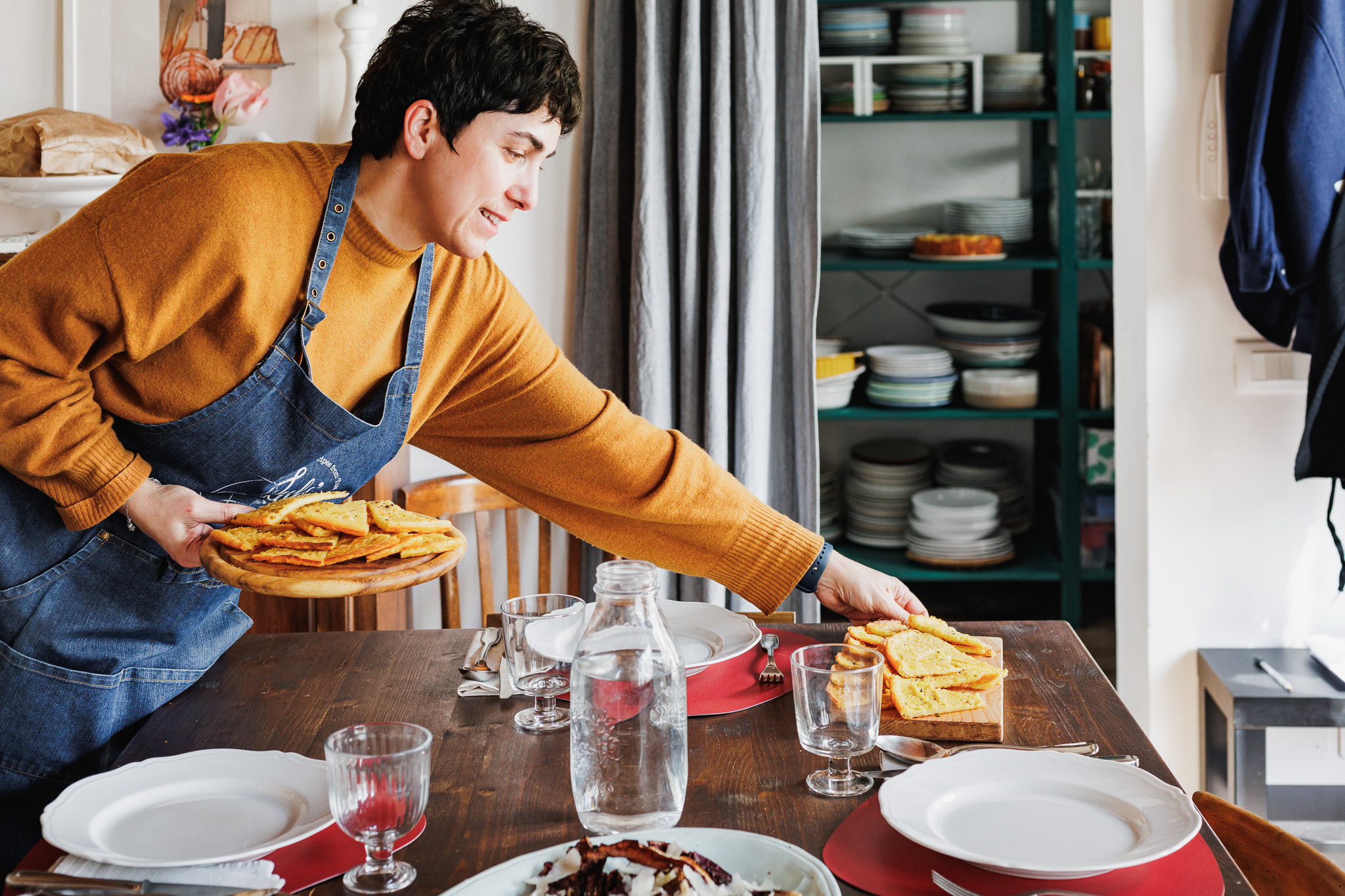
This is the home and studio of Giulia Scarpaleggia, a chef and cookbook author who hosts people from all over the world in her kitchen to learn about cucina casalinga italiana.
A Farmhouse Legacy: Where the Hearth Meets the Heart
But before it became Juls’ Kitchen, it was her childhood home, and that of her father and her grandmother before her. It was a traditional Tuscan life, she says, but as a young woman, she dreamed of a life abroad — of foreign languages, distant cultures, and of course, undiscovered cuisines.
These interests led her to open her first cooking blog. This move would initiate a journey over the next 17 years to eventually become a foremost expert on Tuscan and Italian cuisine for visitors to the region, turning her gaze from places beyond to her very backyard, where she would gain an ever greater appreciation for the land where she was raised, the bounty it provides, and the food she was fed.
“I had a dream, sixteen years ago, when I opened my blog, Juls’ Kitchen, and began writing in English. I wanted to share the beauty of Italian food with the world. To be honest, I hoped to become one of the most trusted voices doing just that,” she said in a newsletter article from last year in which she reflects on her beginnings.
Back in 2009, blogging was a whole new world, and although she had this dream in mind, over the years, she would have to elbow her way into a saturated media landscape telling the stories of Italian cuisine.
Although, she says, she feels she’s carved out her own little corner, in many cases, breaking through the noise has been made harder by the simple fact that she is Italian and not a foreigner looking in.
“Being Italian doesn’t make me more qualified than other authors to write about Italian food,” she said in the article. “That much is clear. But it shouldn’t make me less qualified either. It shouldn’t make me any less appealing or capable of sharing our food culture with an international audience.”
Breaking the Mold: From Thai Curry to Tuscan Soul
On her blog, an early recipe from February 2009 shared a quick recipe for Chinese Fried Rice – she was looking to “cook something light and springlike,” she wrote. The accompanying photo is straight out of late-aughts internet culture. This was one of her first English recipes, but you can see that a few months later, something new emerges: the writing, now consistently bilingual, shifts focus, the recipes are predominantly Italian, and the photos are professional, thanks to the help from her photographer husband Tommaso Galli.
This transition to a bilingual blog about traditional Italian recipes — her family’s — came from Giulia’s gaze beyond Italy’s borders. An avid traveler, Giulia made many international friends, who were curious about Italian dishes and how to make them. Something clicked. Although she had started to gain a following from its inception, things began to take off and she would go on to build a community around her passion.
Several recipes stand out for one common denominator: Nonna Menna.
“I inherited my passion for cooking from my nonna Marcella — I used to call her Menna when I was a child,” Giulia says of her grandmother’s influence on her. “She learned to cook from other women in her family. Her food was deeply rooted in seasonality and our Tuscan peasant tradition.”
In these early days of the blog, Giulia was still working full time in marketing and communications. But as her audience grew, by year three she was able to quit her job and dedicate herself fully to her budding cooking empire.
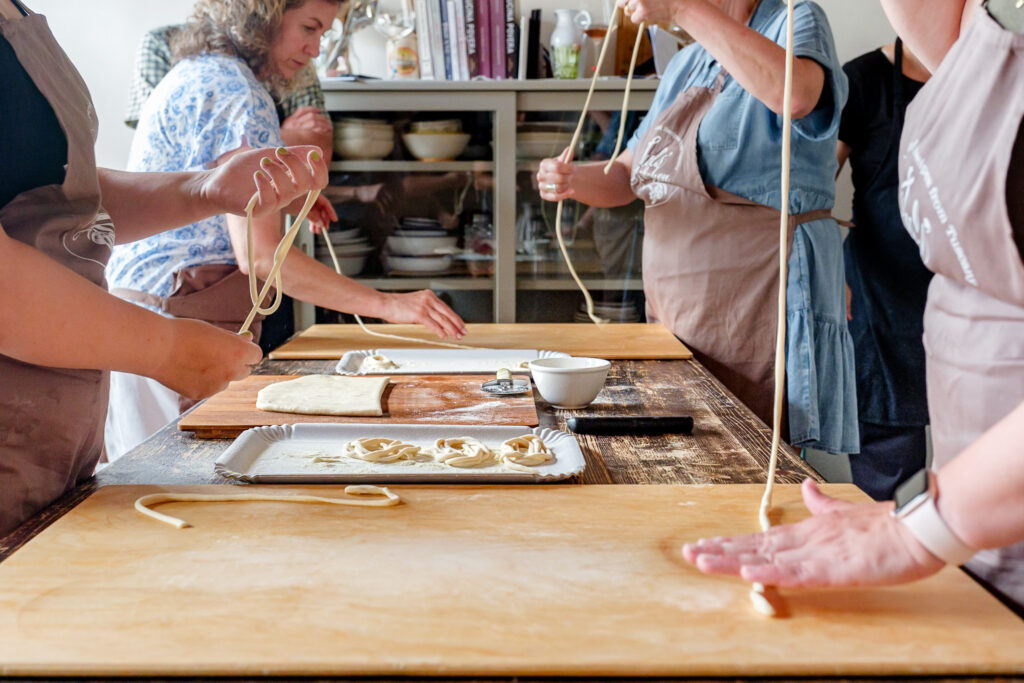
The popularity of Juls’ Kitchen led to cookbook deals and on-location cooking classes, a podcast — Cooking with an Italian accent — as well as many other opportunities over the years.
The Motherhood Pivot: Finding Freedom in Structure
But 2020 would be a year of major transition — and not only for the reason you might think. Of course, the pandemic interfered with Giulia’s business, requiring her to halt in-person cooking classes at her Tuscan countryside studio, but big things were on their way. That year, she and her husband welcomed a baby daughter, something that would disrupt their entire work-life system — for the better.
“Becoming a parent brought structure and boundaries to work,” she says. Where before her and her husband could work into the evening or over the weekend, blurring the limits of a traditional work schedule, with a tiny newborn to care for, they had to reimagine the way they fit their work into a day. And it ultimately made them more productive.
Raising her daughter also reinforced certain values she had held dear but now carried new meaning — being close to nature, cooking more sustainably and nurturing her deep connection to her home, which meant exploring the land around them for a greater understanding of the freedom it provides.
2020 was also the year she got a major book deal for her first English language cookbook – Cucina Povera: The Italian Way of Transforming Humble Ingredients into Unforgettable Meals.
After writing five books in Italian between 2011 and 2018, she would have to adjust her approach to writing for a new audience — mainly North American. It was a new challenge, requiring more detailed explanations of cooking techniques, adjusted ingredient lists to take into consideration what is available outside of Tuscany and Italy, and remembering that she cannot take the knowledge she has absorbed over the course of her life for granted.
Adding to the inherent challenges of writing for a new audience, Giulia was met with the steep competition of the English-speaking food media landscape, already crowded with Italian cuisine heavyweights (Stanley Tucci, Giada de Laurentiis, Nigella Lawson, to name a few).
She was even told she might never see real success while living in Italy. They were implying, she says, that “if you want to write about Italian food for an international audience, you must either be a foreigner living in Italy, with the wide-eyed wonder of someone discovering a new world, or an Italian living abroad, viewing home through the soft-focus lens of nostalgia.”
Her recipe writing improved as a result of this challenge, and cooking classes were a chance to refine recipes, a feedback loop that helped her understand what people outside of Italy know and don’t know, what works for them and what surprises them.
Ultimately, she has found success in her work, albeit not at the levels of the aforementioned heavyweights, but for her the important thing is that whatever gaze is being portrayed through the narrative, it must be done with honesty.
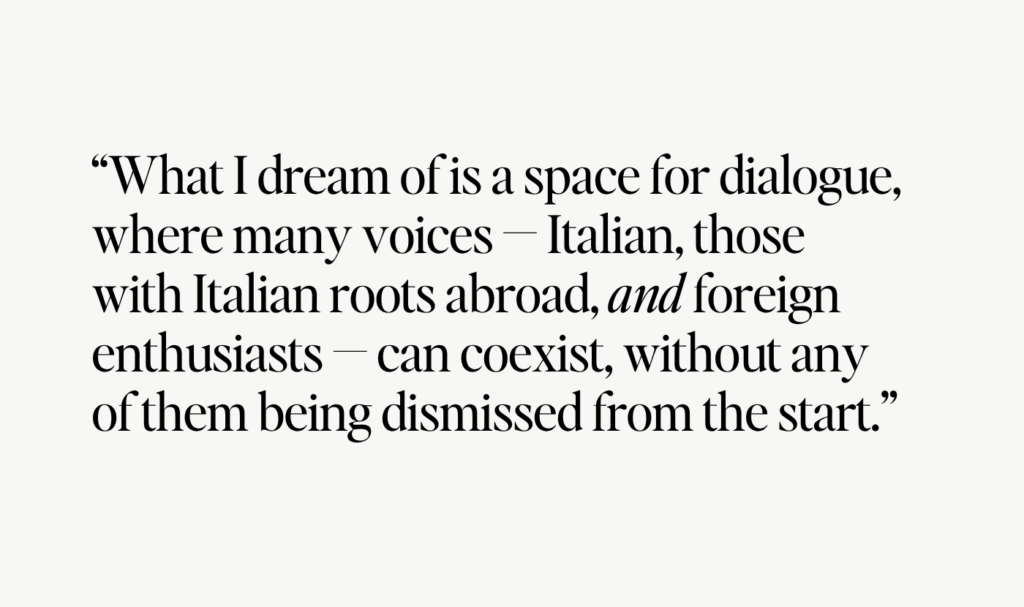
“When stories are filtered and repackaged too much, we might end up amplifying the very stereotypes that are so hard to shake,” she adds. “What I dream of is a space for dialogue, where many voices—Italian, those with Italian roots abroad, and foreign enthusiasts—can coexist, without any of them being dismissed from the start.”
A Flexible Narrative: Rediscovering Italy’s Plant-Based Roots
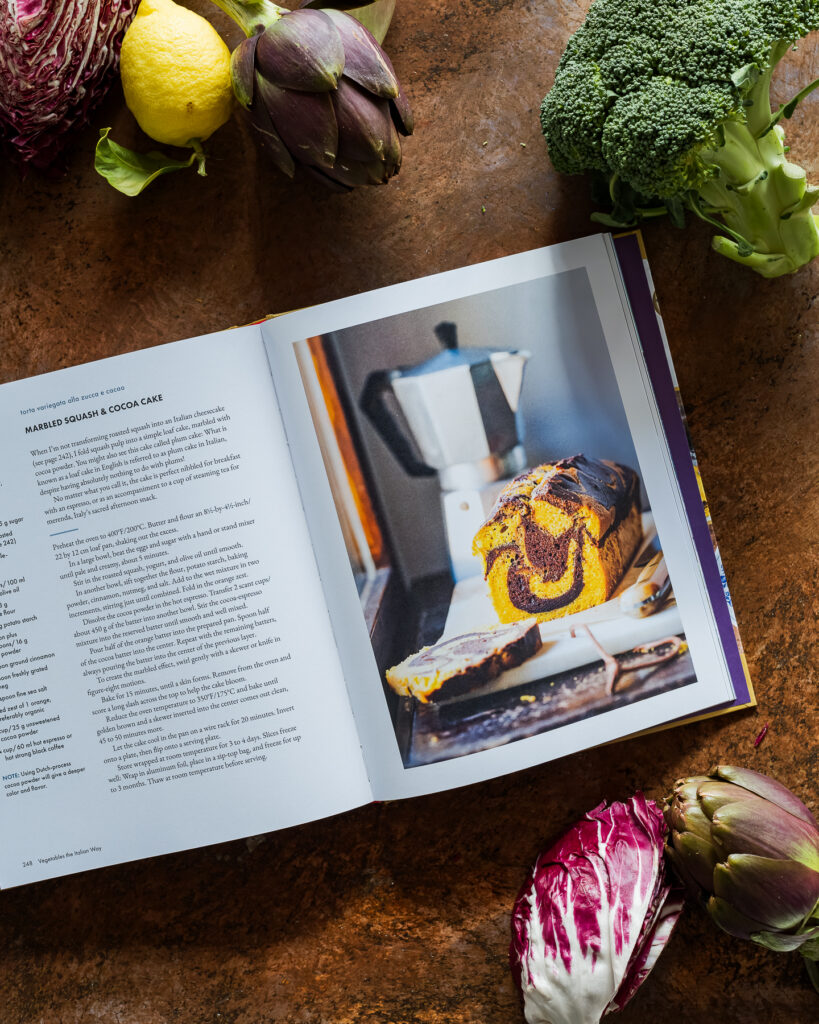
Despite being Italian and having an innate relationship to the cuisine of her homeland, Giluia’s approach is not fixed. It’s flexible, always adapting, learning, and defying stereotypes. Often, revelations about misconceptions and gaps in knowledge are crumb trails that lead to new destinations. For the past couple years, Giulia has been working on her next big project: a new cookbook that came out on April 14, Vegetables the Italian Way.
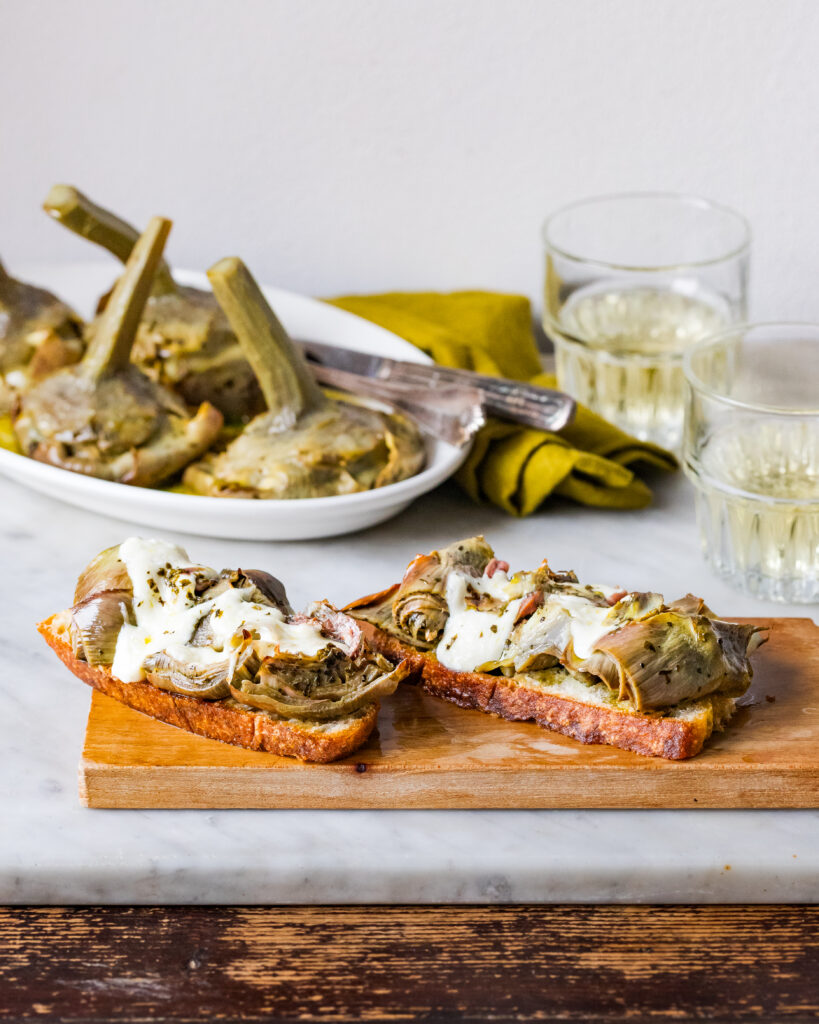
Over the past five years, since becoming a mother and thinking more critically about the way she cooks and eats to embrace a more sustainable approach, the plant world has become an important interest for Giulia. Research showed how much more plant-based traditional Italian cuisines were in the past and foraging studies broadened her knowledge of the spontaneous edible world outside her door.
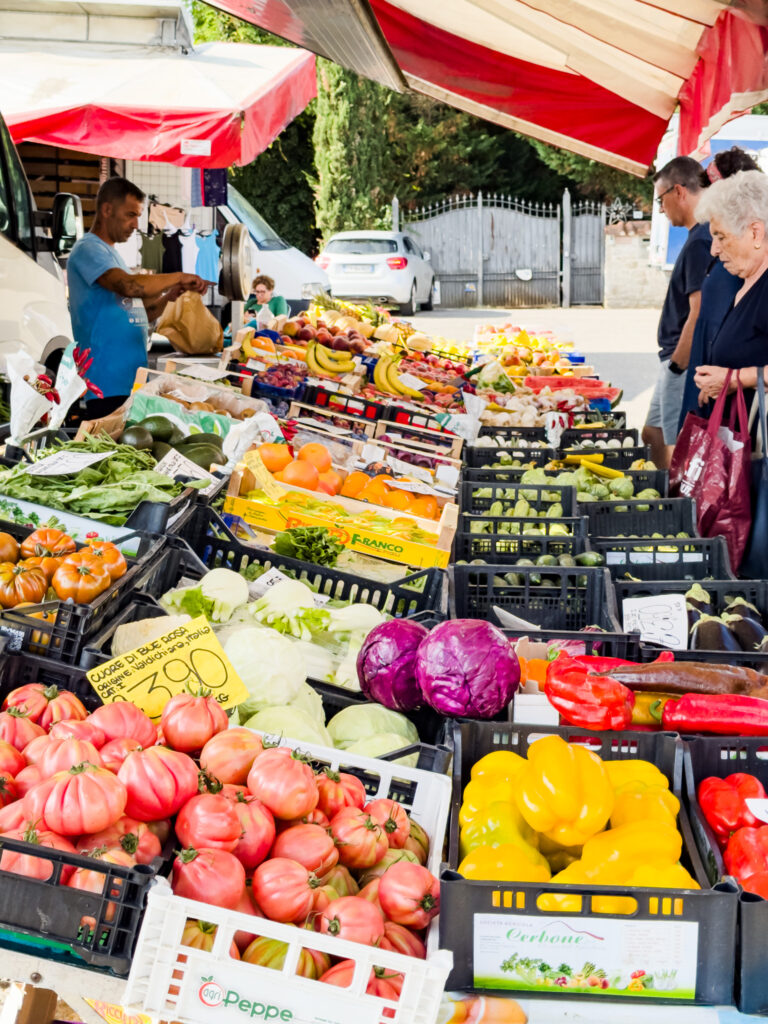
Meanwhile, she found that students in her classes, who come from all over the world, tend to have skewed notions about Italian cuisine and the role of vegetables. When one visits Tuscany, many of the restaurants a tourist might frequent will favor meat – la fiorentina — and pasta dishes — i pici. But true cucina casalinga — home cooking — is heavily plant-based, employing techniques that most foreigners haven’t encountered.
She decided to close that gap.
Like the seasons in her Tuscan backyard, things for Giulia and Juls’ Kitchen evolve from year to year, but one constant remains and that’s what drove her to start in the first place.
“I love eating!”
“Food has been an instrument of personal growth and self-affirmation,” she said in a podcast episode from 2020, “a lens through which I could discover the external world and explore my inner universe, sometimes all the more complex and multifaceted.”



Read the Comments +