




By. Michelle Schoenung
After separating from my Italian husband, I discovered belonging in the Belpaese meant returning to my own rituals
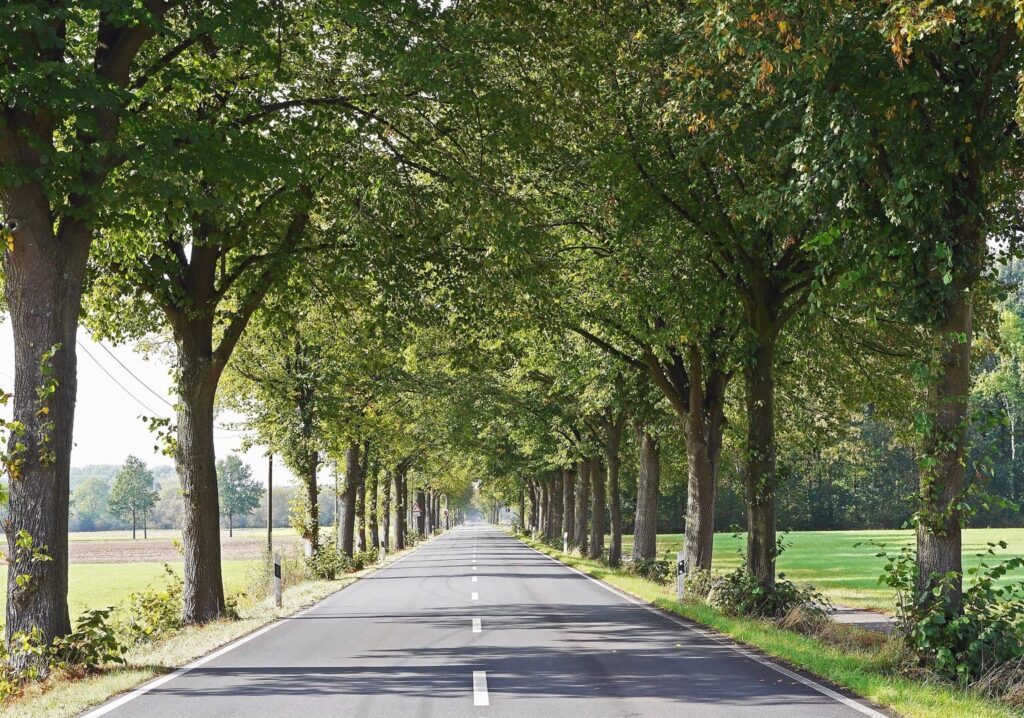
On my first day living in Italy in late spring 2000, I decided to combat jet lag by taking a long bike ride to explore my new neighborhood just outside of Milan. The fading glow of sunlight flickered through the rows of nettle trees as I pedaled home, and I gave into one of those admittedly cringe-y “I actually live here now!” moments.
As I rounded the corner onto my heavily populated via, I was confronted with the comforting clatter of pots and pans and the chiming of utensils being ceremoniously arranged. Bambini, a tavola! (kids, come to the table!), came a shrill voice from an open window as the theme music of the dinnertime news broadcast blared. The sounds were as stereotypically Italian as fresh laundry hanging from the line off a crumbling pastel-hued palazzo in a Neapolitan alleyway.
I would learn that this mealtime symphony was conducted at least twice a day. But if daily repasts were chaotically orchestrated affairs, Sunday lunches – a marathon labor of love traditionally carried out in the cucina by womenfolk – were performances of epic proportions, resulting in an endless stream of courses to be shared languorously around a convivial table.
I was in my late 20s and had been living on my own for well over a decade and had no set Sunday ritual. I would sometimes do the Times crossword puzzle while eating a bagel or meet friends for brunch and then wander aimlessly through neighborhood street markets.
I’d come to Italy to be with my Italian boyfriend as he finished up his degree, but I hadn’t fully cut ties with my life back in New York City. A friend was staying in my Brooklyn apartment, and I still had my freelance magazine-editor job. The plan was to return to the U.S. when my boyfriend finished school, but I wanted to soak up as much real Italian life as I could while there.
A child of divorce, I had no experience with regularly held marathon feasts though my family would sometimes get together for meals on holidays. When I met my Italian boyfriend through friends and began visiting him more frequently, his close-knit family and their raucous communal meals at a long table in the garden were one of the things that made me fall in love with him.
But as the years went on, and we married and had children, the predictable Sundays that stretched from late morning to long into the afternoon, began to feel more like an obligation than simple pleasure. I appreciated that my two boys were growing up near their dad’s family – we lived around the corner and saw them daily – but I began to wish that we could also embrace the non-traditions of my free-range upbringing: lazy, graze-y brunches in pajamas, spontaneous nature walks, or kicking a ball around the park with nowhere to be.
While my in-laws were lovely people overall, they expected us at weekly lunches rain or shine, healthy or ill (after all, my mother-in-law would push through a raging fever or broken wrist to churn out multi-course meals). Not attending meant potentially being subjected to low-grade “pouting” over the next week.
I once tried to explain to my in-laws that while I loved their food and customs, I often missed my own looser traditions and the variety of cuisines found in my home country. It was suggested that, for an upcoming meal with the extended family, I cook the vegetarian chili and jalapeño cornbread that had been a crowdpleaser when they’d visited me in New York years before.
However, when the big day arrived, the gathered crowd was less than pleased with what one grumpy relative dubbed “slop” and “dry polenta.” I felt a bit embarrassed seeing my three-bean chili, cornbread – and the sad little dish with a few tortilla chips that my mother-in-law placed on the table for 15 confused diners – in silver servingware on a silk tablecloth. Though my cooking repertoire extended beyond what you’d typically find at a Superbowl potluck, I made no further attempt to disrupt the rotating menu of lasagne and risotti.
When I separated from my husband in 2020 after more than two decades together, it had nothing to do with family meals or food preferences. But, once I was on my own, I realized that I’d always felt like an outsider despite being fluent in the language and as integrated into the culture as a foreigner could be. I wondered if I could (or even should) try to make a new life for myself in Italy without the anchor of the famiglia I’d had since day one.
That said, I found not having the longstanding Sunday appointment liberating. But I knew that my kids, who were 8 and 12, might have a hard time with the new weekend routine now that they were what my divorce lawyer called “pacchi postali” – “postal-package children” transported from house to house.
The realities of being a single, working mother in a country that was not my own took precedence over cooking five-course meals on Sundays or planning picture-perfect holidays. I struggled to create a “new normal” and despite everyone telling me how adaptable children were, mine had such a difficult adjustment that, still today, my breath leaves my body when I think about it.
My therapist at the time told me I was “planting tomato seeds in January and expecting them to sprout immediately,” and I needed to stop trying to force whatever was to come.
Eventually, those metaphorically planted seeds bore fruit: some perfect, some flawed, but all necessary for our healing in their own way.
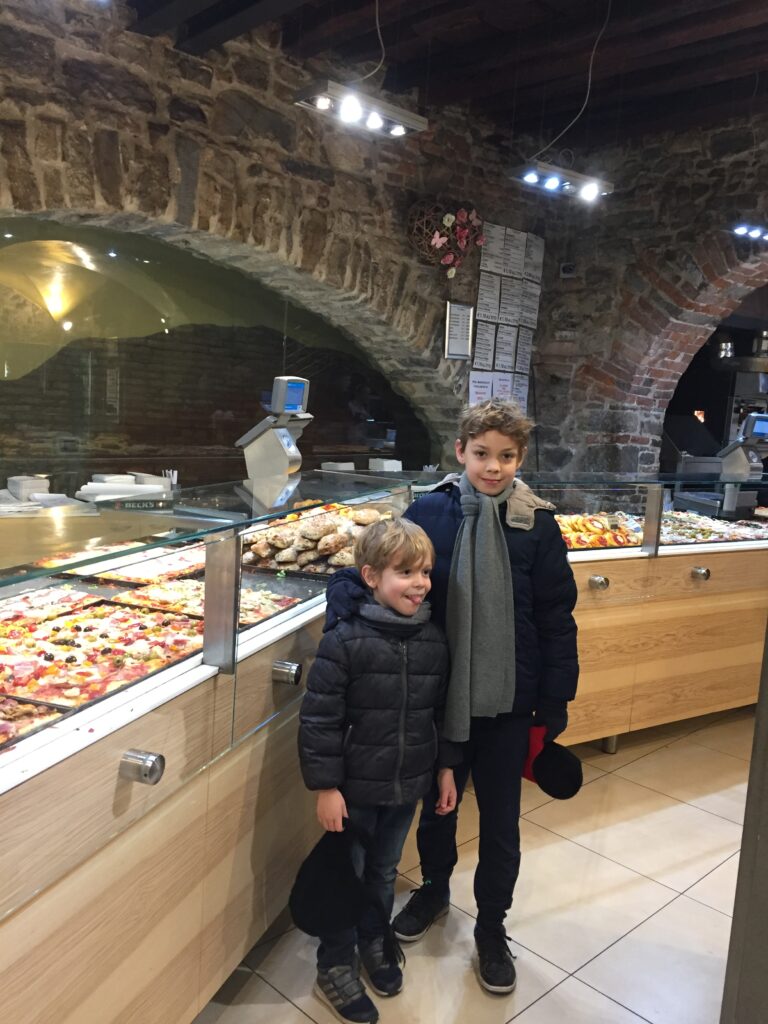
Last year, on Mother’s Day, which was spent with my in-laws when I was married, I told my two surly teenagers that my only request was to have a day out in Milan together. We came upon a “New York” pizza shop near Porta Romana and ordered a few different slices. They perked up when they saw the characteristic condiment shakers with chili flakes, oregano, and parmesan. We then met friends at a Brazilian coffee place (where the boys stayed true to their roots and ordered tiramisu) near the church that houses the Last Supper.
That day, we were not bound by rules or obligations of any kind. There was no expectation that a mother spend “her” holiday in the kitchen. It was as imperfect and improvised as the new life I’d made.
I knew then that I was the anchor. I was home.




Read the Comments +