





By: Kristin Reinhard
The hands are the first thing I notice.
Flying, words switching quickly between English and Italian.
It’s the kind of language mix that happens when my husband and kids talk at home. But unlike here, I don’t dare move our unique language blend out of the safety of our four walls.
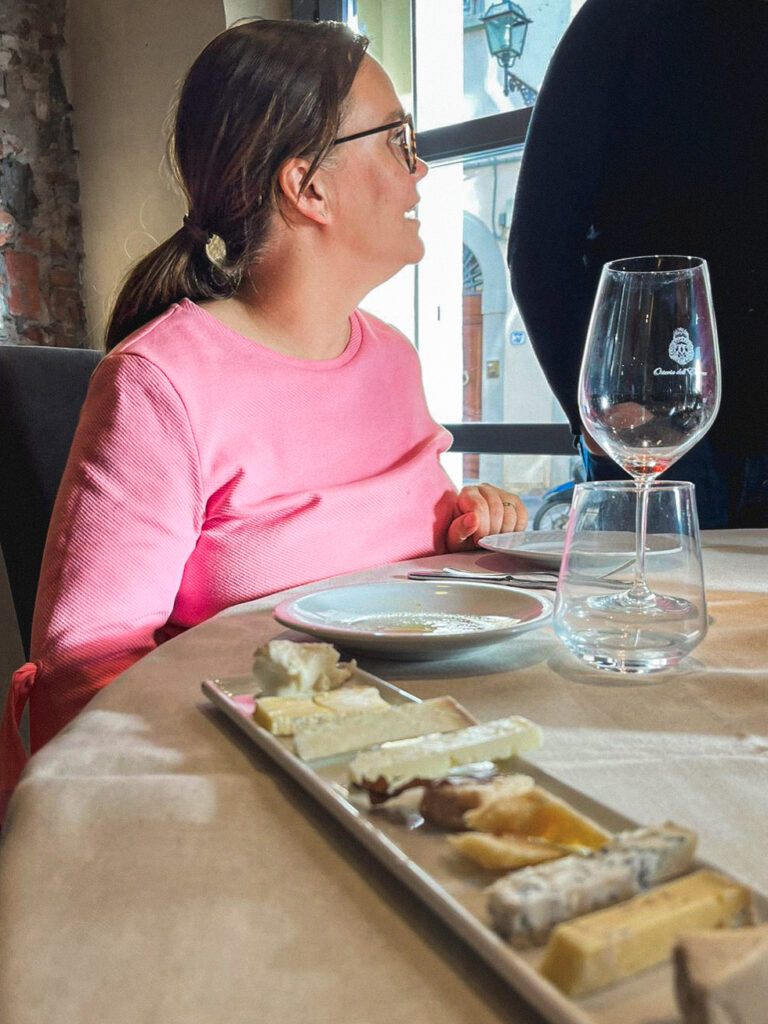
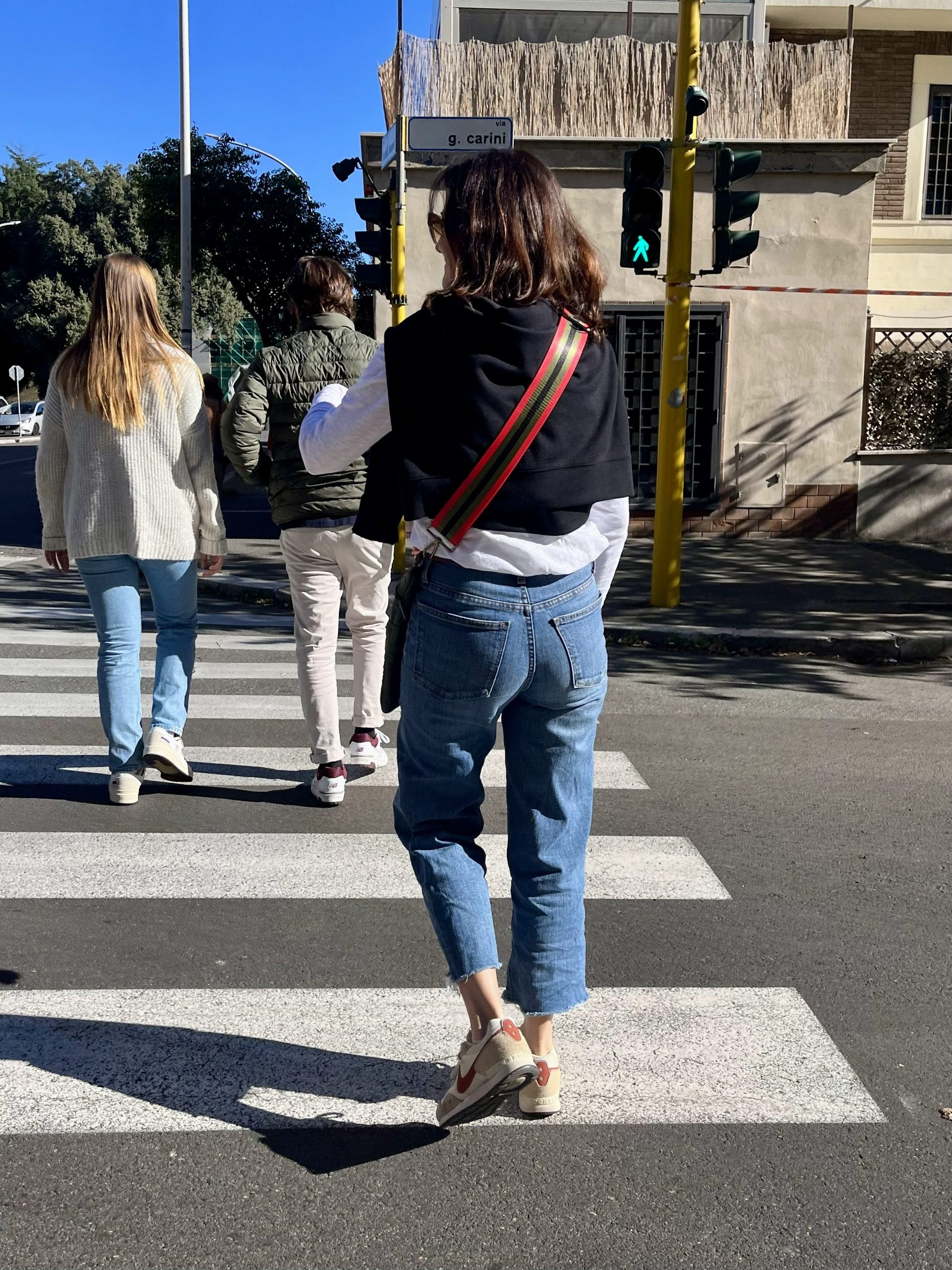
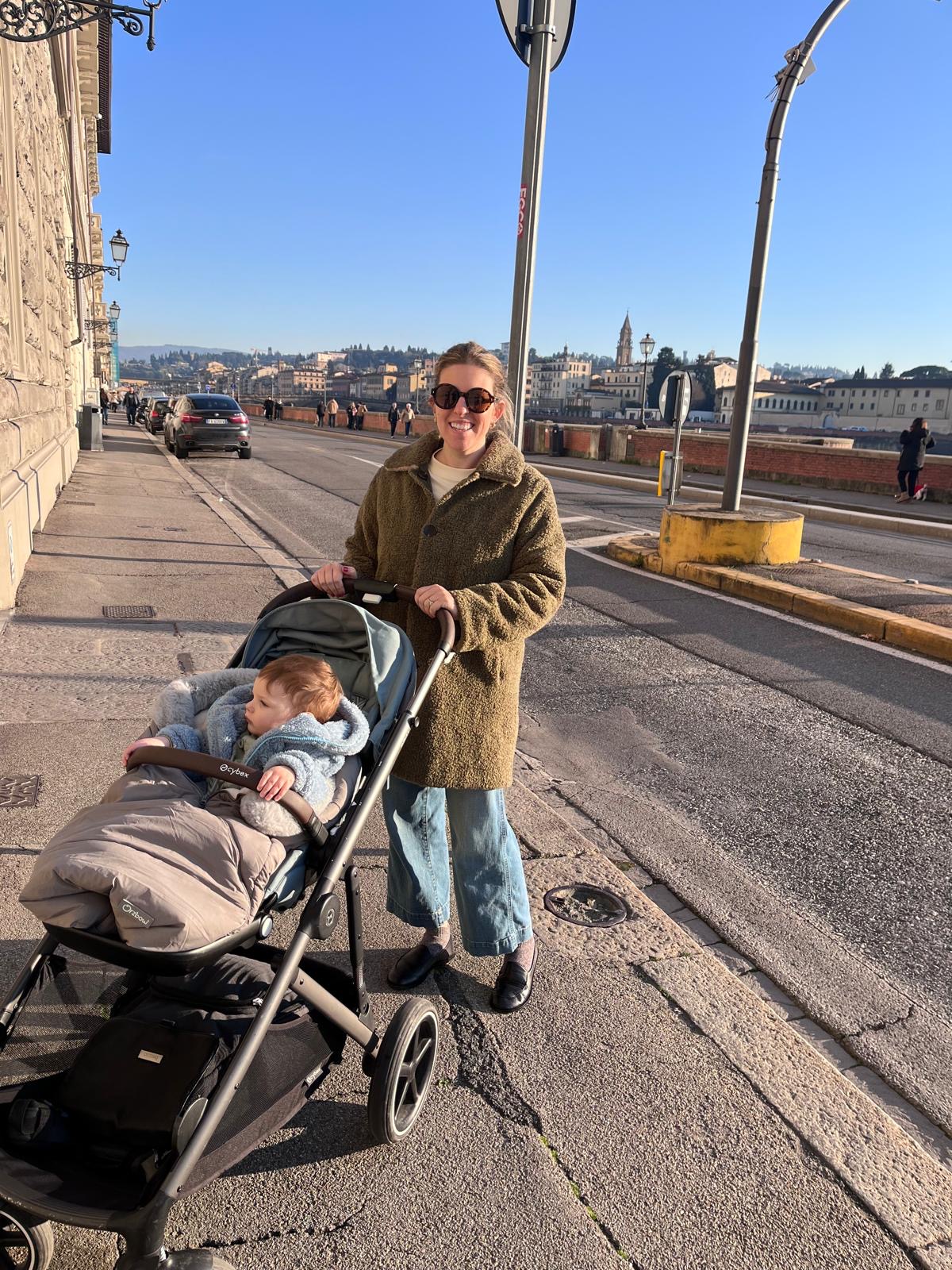
This is my first trip to Florence to visit a friend who has recently moved back. Of everything I’ve seen and done on this visit, what I’ll keep coming back to is this: being a fly on the wall as the lines blur between immigrant and local.
Facing this situation back where I live would break me out into a sweat.
When the two parts of my life come together, there’s no mixing. If I dare to combine the two languages I speak, English and German, I know, no matter where I am, English wins out.
English overpowers German. While the English-speakers laugh loudly across the room, not noticing they’ve taken it over, the Swiss retreat to their corner, voices dropped to dialect, chattering amongst themselves.
And at that moment I have to decide. To choose the ease of the English conversation where my jokes land without an explanation. Or pull up a chair in the corner to earn my gold star of the perfectly integrated immigrant, despite my brain needing to work harder. Or if it’s too hard, I just leave.
So I have resorted to keeping the two parts of myself separate. It is easier that way.
I celebrate my birthday twice — one with the English friends and one with the Swiss ones. My kids do this too.
The Version of Me I lose in German
I didn’t always speak German. In the first year, I barely tried.
I learned just enough to get by, despite my host family doing their best to motivate me. It wasn’t until I met my future husband and saw a future in Switzerland that the importance of belonging to his family and community outweighed the effort of finally learning the gender of nouns.
I threw myself into daily language learning. It was the early 2000s — no Duolingo, no online classes. I went into the classroom every day and learned the old-fashioned way.
None of the other students spoke English well, which was a gift. I had no choice but to speak German and leave my perfectionism at the door.
Within a year I was confident enough to attend doctor appointments in German. I spoke before I was ready. I made mistakes. I let my ego go if someone corrected me, and absorbed every der, die, and das.
But it isn’t as seamless as it sounds.
There is a version of me that doesn’t make it into German conversations. I am quieter in German. I filter before I speak.
I lose the version of me who jokes and doesn’t second-guess herself. Who thinks of things to say once the moment has passed. And underneath it all, I’m always trying to prove I’m not like “the other” English speakers.
Two Parties Are Easier Than One
“What’s the point? Everyone speaks English anyway.”
It’s true. I live in an international hub and it’s possible to get by without speaking a word of German, and many choose not to. The reasons are plenty: it’s hard, there is no time, the locals have enough friends anyway.
So I get why people who are only here for a short time take the easy route and learn just the basics.
But learning the local language is not an optional step in integration. It is essential.
Yet for those who have purchased homes, sent kids to local schools, and decided to stay long-term, learning the language deeply is treated as optional.

I am part of the problem too.
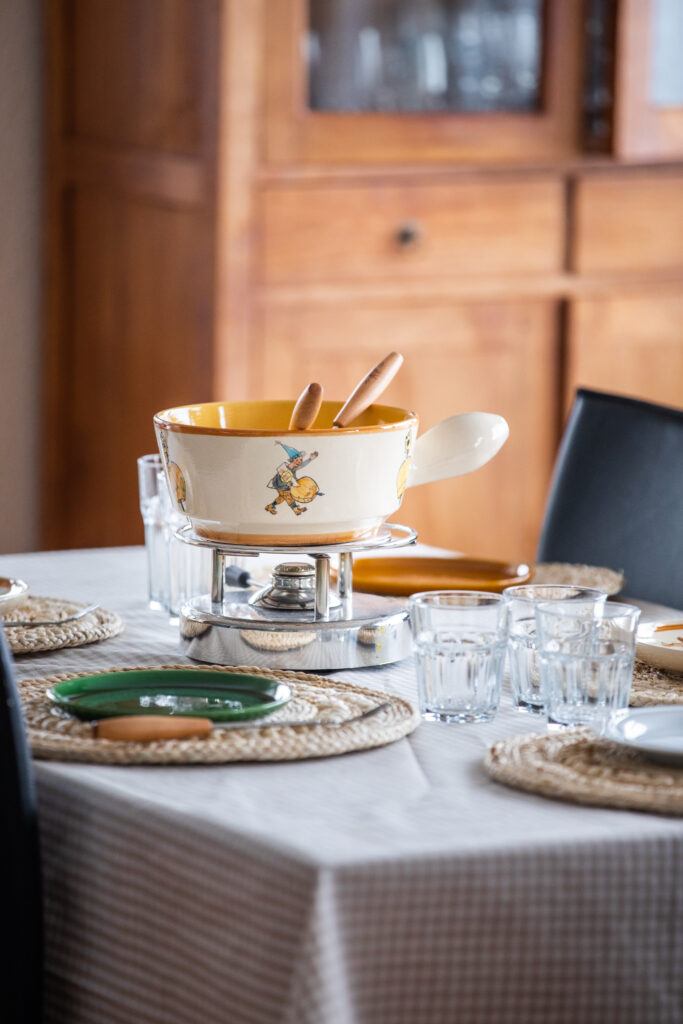
It is easier to host two different birthday parties than to bring both sides together. For my 40th, I spent months deliberating over how to have just one party in one room. But I couldn’t. So days before my birthday I invited a few English-speaking friends over for takeaway dumplings. A month later, I hosted 18 of my Swiss family around the table for raclette.
It was easier to organise, cook, serve, clean and entertain over two days than to put them all in one room.
I diluted my milestone day into two halves.
Keeping the groups separate makes this less uncomfortable for me.
My kids have started to absorb this thinking too, wondering if they should invite the friend who speaks German fine but prefers English separately, to avoid any awkward moments.
Should I be the bridge between the two sides of the room?
It’s for sure easier not to be.
The Night No One Translated the Room
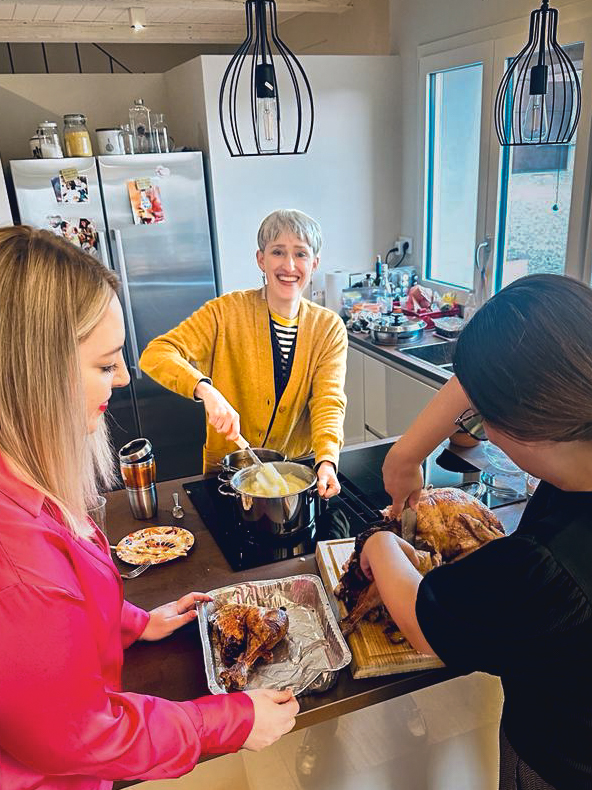
Back in Florence, the host felt no need to act as translator.
She let the melange of language flow as freely as the wine. The mix was out in the open — no hiding the other side, the room left to figure itself. .
What looked easy was in fact a journey of small decisions made by both sides over the years. Locals patient with imperfect Italian. Immigrants speaking before they were ready. A host who built a group of friends willing to do the work.
There is no right or wrong way to integrate. But the effort on both sides makes a room like this possible.
Back home, I’ve been doing the opposite. I’ve been hiding the two sides of my life from each other.
But Florence made me realise that being the bridge is not about being the translator, making sure everyone feels comfortable. It is putting both sides in the same room and letting them figure it out.
I don’t want my kids to sort their friends like I sort my parties.
Maybe, at my next birthday, I’ll invite both sides and see what happens.
You can follow Kristin via her website z’Nüni, her writing portfolio, or on Instagram.




Kristin this was a very open and honest look into what migration looks from a lense I’m familiar with
Thanks for sharing! And whatever language you speak sometimes it’s not the words that are heard but the actions my friend!
Thank you for your insight into this topic. You said it perfectly, ” I lose the version of me who jokes and doesn’t second-guess herself. Who thinks of things to say once the moment has passed. And underneath it all, I’m always trying to prove I’m not like “the other” English speakers”. I feel this deeply. I have my “expat” friends and my Swiss friends and rarely do they intersect. As for the Italian and English flowing freely in the same room, do you think it also has to do with the cultural differences as well? Italians and English speakers are generally both loud and boisterous. The Swiss generally are more reserved and quieter. Perhaps that’s why it doesn’t work so well with the flow of two languages in the same room? I often don’t take the time to reflect on the two parts of myself, but your writing really made me take pause and give it some thought. Thank you!
Hi Kristin, thank you for your effort, it was extremely interesting. I’m a “german speaking Swiss” that left CH sixty years ago as a young trades man, i am in Australia since 82.
I would say that here in Australia at a party with Swiss immigrants and Aussies, one would hear both languages equally loud.
My mother was originally Italian speaking , but my father probably forbade her to speak Italian to us children. Which is sad.
When I was a child live was very tough in Switzerland and sometimes I tell people here in Australia that I did grow up like a cockroach.
So Kristin, when you experience especially the german speaking Swiss in an unfamiliar way, just accept it as such. But they are good people, just very different.
Here in Australia I mostly speak English to the few Swiss people I know. Maybe you and your English speaking friends should all speak German, or French, or Italian whilst in Switzerland, but if possible the Swiss German dialect and not “ high german “.
We as a family lived in CH for a few years, but for my English speaking wife it was a difficult time.