




by: Sheean Hanlan
After pivoting from classical painting to illustration and building a full-time career from her art, the author found herself quietly pushed out, and pushing herself out, of Florence’s traditional art world. Here, she interrogates what classical atelier training actually produces, who it serves, and why so few of its disciples end up making a living as artists.
“I wish I could be an artist in Italy and eat pasta all day,” my childhood best friend Yamir said over dinner.
It was a light-hearted remark, but it stung. She was a medical student with the promise of lifelong financial stability; I was always just one early life crisis away from everything falling apart. But through her rose-tinted glasses, my life looked like a Renaissance princess fantasy.
And honestly, there were parallels. I wore perfumes supposedly blended for Caterina de’ Medici. I lived in a villa featuring a private balcony and a gazebo. I regularly befriended leather artisans and luthiers. Most importantly, I was studying art at a classical atelier, where I had spent the last few weeks modeling as a muse for my peers.
The only problem? My life up to that point was far from anything Giorgio Vasari would have chronicled in The Lives of the Most Excellent Painters, Sculptors, and Architects.
I was running out of money, losing my mind, and on the verge of quitting art school. I felt as soulless as Florence must have felt when its cathedral sat without Brunelleschi’s dome for over a hundred years.
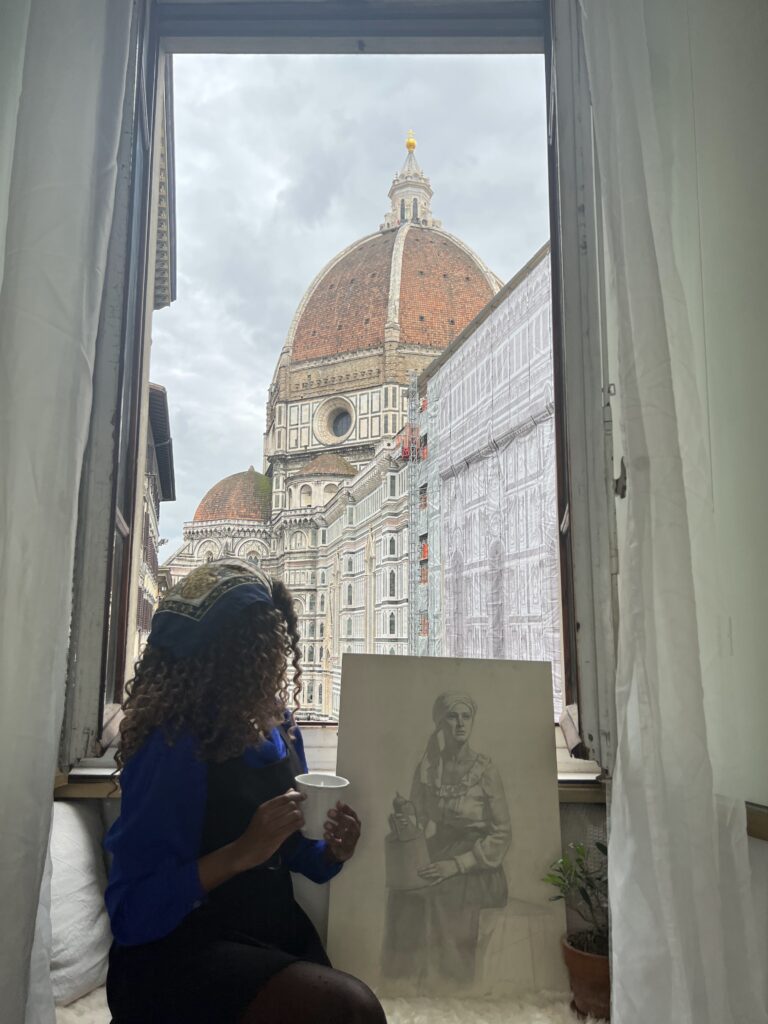
The monastic order of the brush
I had arrived in town as a true disciple of the atelier system. In Il Libro dell’Arte, the 14th-century master Cennino Cennini advises apprentices to treat the study of art like theology: limit your drinking, your meals, and your romantic life, warning that “frequenting too much the company of ladies” could lead to an unsteady hand.
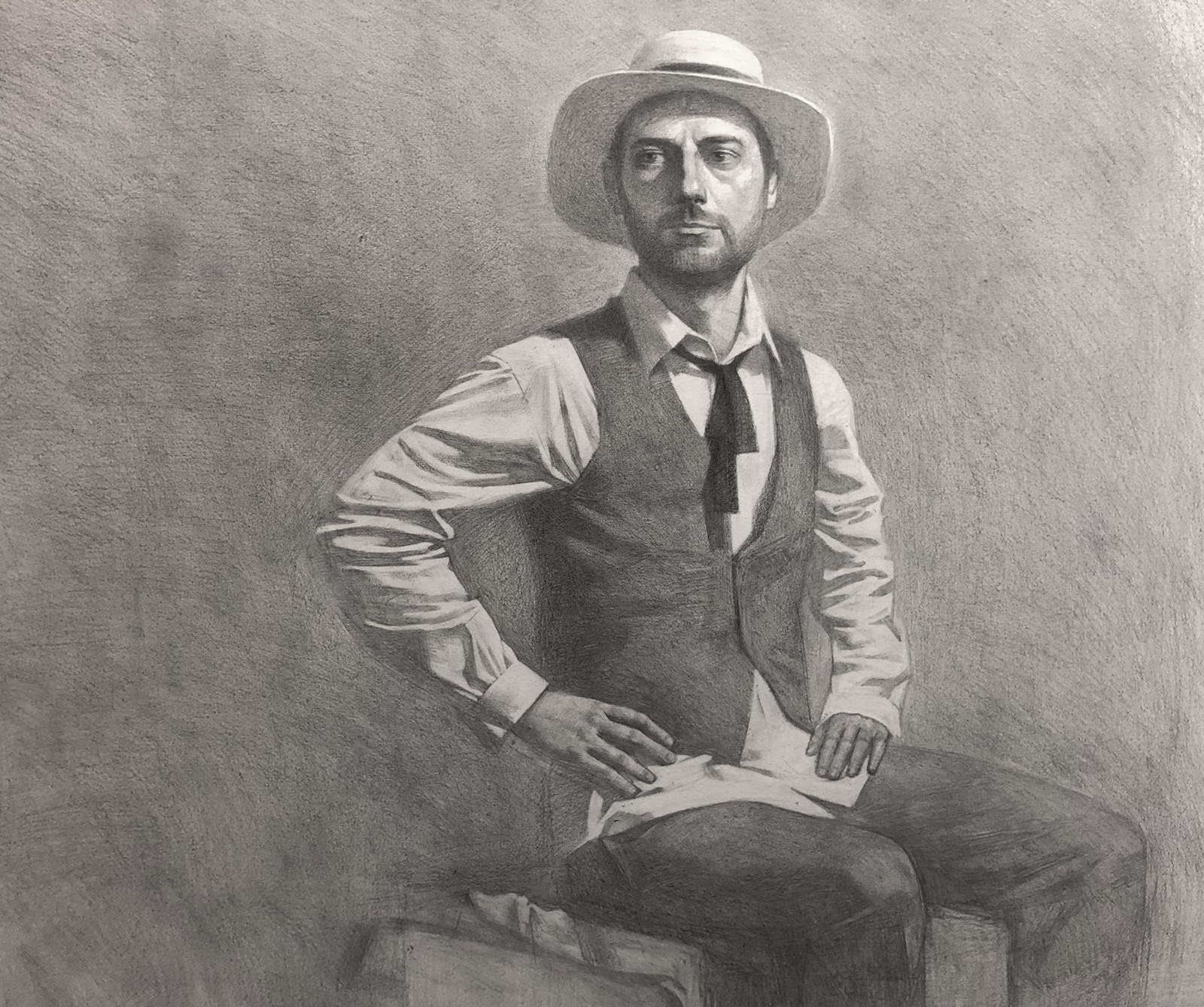
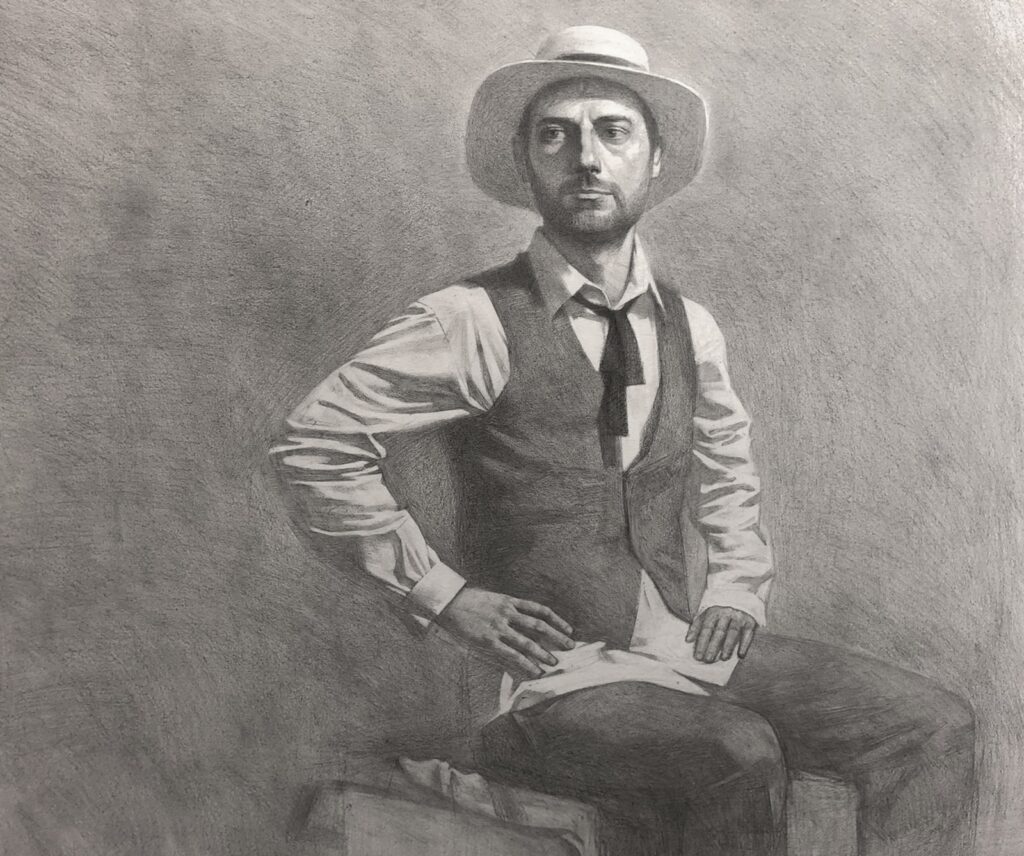
The students in my atelier could have passed for a sect of artistic monks. Our teacher was the master of this monastic order — a stoic man who drew the muscles of a live model with such force that I was convinced his confident lines taking shape in the chiaroscuro were what God must have looked like forming Adam.
Studio life was intense and all-consuming. The mostly male students arrived hours early, stretching drawing papers and studying the bones of the hand. Many were financially supported by their parents or didn’t require visas. They lived in Florence but stayed a world away from the city’s actual culture. For them, the only thing that mattered was the work.
Initially, the guys welcomed me — floral Dolce & Gabbana skirt and all. They lent me anatomy books and demonstrated technical concepts during coffee breaks. I admired their skill, even as they evaluated their own work with a severity that bordered on self-punishment.
But I couldn’t keep up. Instead of arriving early at the studio, I spent mornings studying for my B2 Italian exam to keep my visa. After class, I rushed home to fund my existence through freelance writing and copywriting across time zones. A nagging sense of guilt grew in my chest. My self-esteem chipped away like the brass nose of Il Porcellino, rubbed smooth by hordes of tourists seeking good luck.
To cope, I began documenting my life on TikTok — 45-second glimpses of drapery studies, vintage finds, and €8 truffle pasta that slowly attracted 90,000 followers.
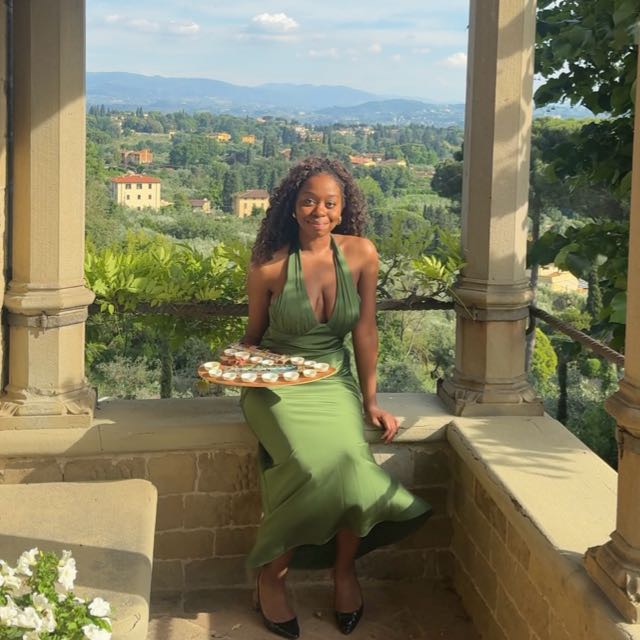
The guys in my art circle met my videos with smirks. In their eyes, my social media presence was proof that I was unserious. They valued obscurity and restraint; I was expressive and visible. Clearly, I wasn’t training hard enough.
During those months, I tried to morph into the melancholy, technique-obsessed men around me. But while I am passionate about craft, I do not believe in suffering or waiting indefinitely to feel “ready.” In trying to fit their mold, I lost a piece of my own femininity.
The view from the platform
One winter, plagued by doubts, I found myself in the studio acting as the muse rather than the artist. Was I disciplined enough for galleries? Did I have the money to continue this? And why didn’t the advanced students already have their work in shows? I shifted in my seat, scanning the room. Simon’s sepia portrait of me was deeply depressing; the expression on my painted face mirrored someone who had spent the entire day dealing with bureaucracy at the Questura di Firenze.
“Sheean,” my teacher interrupted. “You can take a break if you want.”
I stepped down from the platform, a cream wrap clinging to my terracotta skin, my hair tied in a blue and gold satin scarf. As the students slipped outside to smoke, I walked from easel to easel. While each likeness varied, they all carried one common thread: they portrayed a woman at her breaking point.
I quit art school that month.
What I saw across multiple ateliers was a system built on false hope. Students waited for the artists above them to break into galleries and make a living. It almost never happened. Instead, success was measured through €500 competitions judged by alumni of the very same schools, where lifeless portraits were awarded runner-up certificates like consolation prizes.
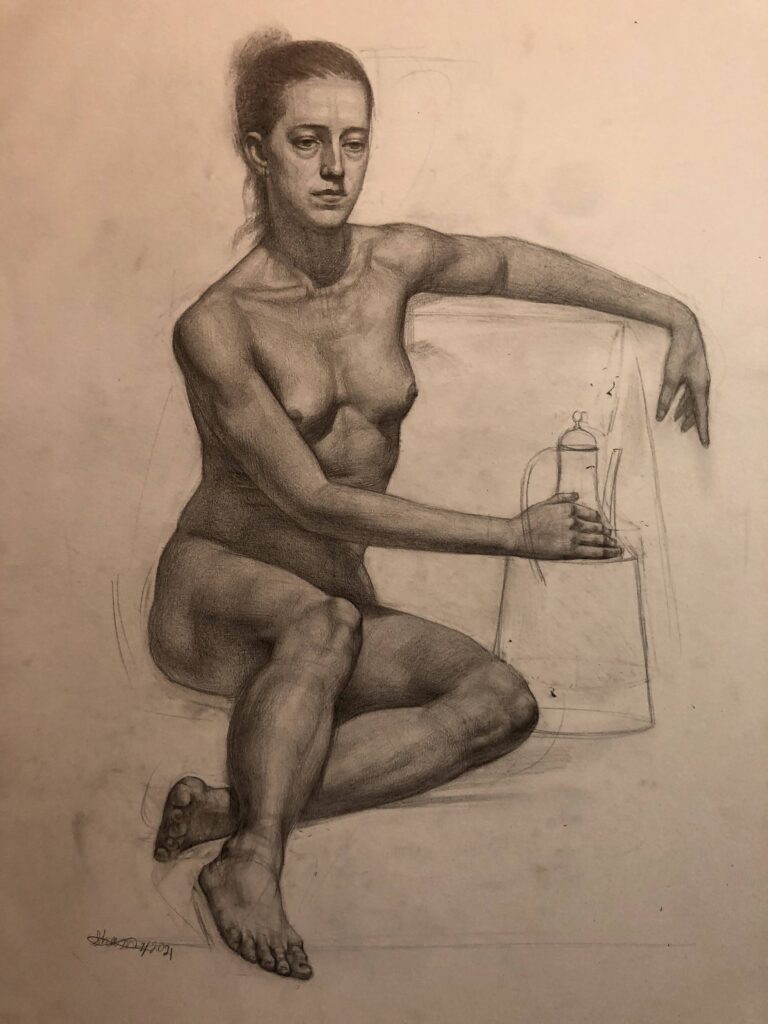
Graduates rented studios from older artists who had already failed to build something sustainable in Florence. Many were heavily subsidized by their parents, moving in social circles of marquises and baronesses, all while insisting the modern art market was simply too corrupted to recognize “real” talent.
Yet the ultimate question was never allowed to be asked aloud: if so few atelier graduates are actually selling, exhibiting, or surviving from their work, what exactly is this system training people to become?
Unlearning the rules
The catalyst for my departure from that world arrived in the summer of 2023, when I met my partner at the rooftop bar of Hotel Baglioni. After years of dead-end dates, his steady, honest presence felt instantly grounding. Shortly after, I relocated to the countryside in Impruneta. The buses into town were infrequent and unreliable, making a return to art — something I had avoided for months — inevitable.
Isolated in the Tuscan hills, away from the judgmental eyes of the academy, I began to paint what I actually liked: fast, colorful sketches of villas, gardens, and palaces. I stopped caring whether anyone from my art school would approve. Mistakes became teachers rather than sources of shame. It took months of unlearning, nurtured by an environment where I finally felt safe.
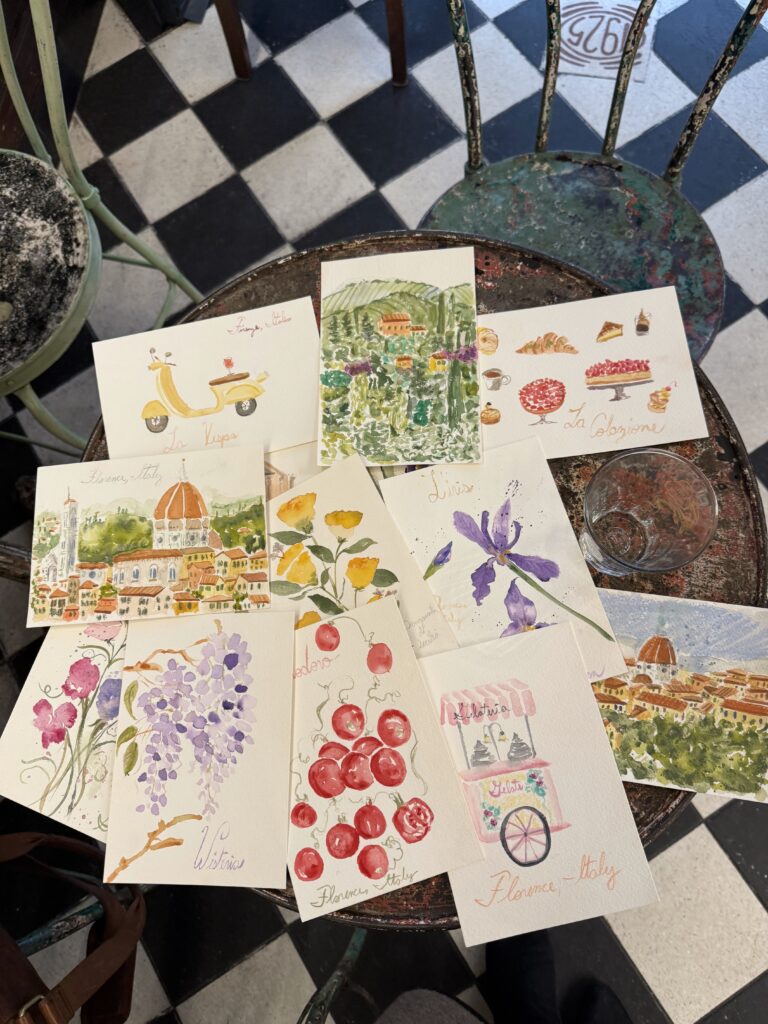
I still remember a red chalk self-portrait I drew at 27 years old, where I accidentally gave myself two left hands. I liked it anyway. From then on, I stopped chasing technical perfection and leaned into something more whimsical, feminine, and instinctive. That shift led me directly to illustration.
Naturally, the purists drifted away. Some people unfollowed me as my work became more stylized; I blocked others myself. But two years after leaving art school, I had found my niche. I learned how to market my work online and position it as the answer to my target audience’s desires. By excommunicating myself from the classical art community, I finally built a full-time career from my brush.
The atelier taught me how to see, and it gave me the technical tools to execute my work. But it could never show me how to translate that vision into an original voice or a sustainable career.
That, I had to figure out alone.
There is more than one way to be an artist today. It can mean creating fine art for collectors, but it can also mean illustrating weddings in historic villas, sketching life as it unfolds, and finding a practice that feels entirely your own. I had to learn how to define success without inheriting someone else’s version of it.
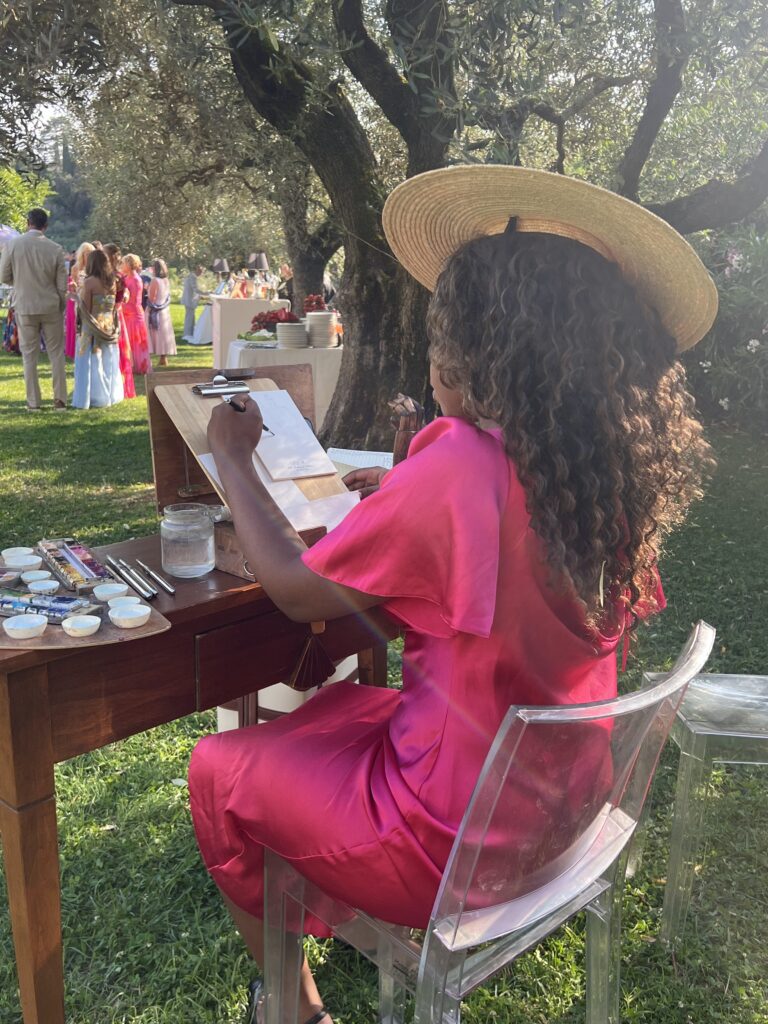
Now, I am an artist in Italy. And no, I still don’t eat pasta all day, but I finally get to enjoy the meal.

‘Mistakes became teachers rather than the source of shame.’ This comment was a significant awareness for me in my journey of learning/speaking Italian. Thank you!
Thank you for adding to the conversation, Geri! I think we should all embrace Leonardo da Vinci’s approach to mistakes: it’s a form of learning. The obstacle is the way!