




by: Georgette Jupe
On the occasion of reading Rebecca Serle’s ‘One Italian Summer,’ seven long-term foreigners break down what happens when the fantasy fades and real life in Italy begins.
There is a distinct trope in women’s literature, stretching from E.M. Forster to Elizabeth Gilbert and Rebecca Serle, that treats Italy as a sort of cinematic cure-all. In these narratives, the “woman in crisis” uses a backdrop of warm light, ancient stones, and good wine to piece herself back together, reclaiming an identity swallowed whole by loss, marriage, or expectation. (And usually, a gorgeous local man to accelerate the healing.)
As a slightly naive 21-year-old arriving fresh from a teaching stint in China, I wasn’t immune to the fantasy. I genuinely believed moving here would make me fluent in Italian, adept at complicated card games, and magically transform me into a sleek, self-assured adult who knew exactly what she wanted. It seems almost easy to treat the country like a postcard catalyst: just add fresh pasta, a sunset, a glass of wine, stir, and watch the self magically reconstruct.
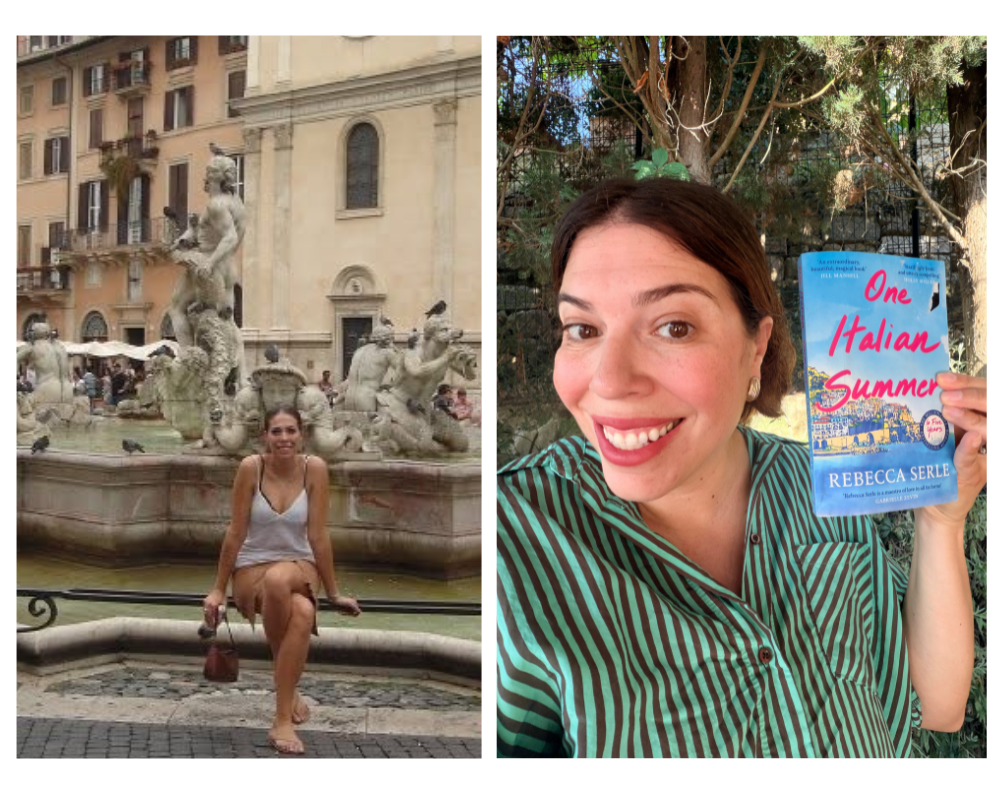
Decades later, having built a life here, married here, left, returned, and then returned again post-baby in 2023, that romanticization at times makes me wince.
But so does its modern counter-reaction.
Italy content online has many times flattened into extreme polarization; rage-bait algorithm fodder on one side, hyper-curated aesthetic fantasies on the other. For those of us who have called this place home for decades or forever, it frankly can be exhausting. The reality of life here isn’t just eating good gelato, finding all the best places, falling in love with Italian men, or having it all figured out at 29. It isn’t pure hell, either. It’s a messy, imperfect middle ground. One that deserves an honest assessment, balancing the simple daily wins and daily awe with the background hum of tax bills, balancing childcare and rising rents.
Which is why, inspired by Katy’s journey in One Italian Summer, I reached out to women who actually packed up their lives and moved here to get their take.
What I found in their stories is that Italy doesn’t let you get away with performing it’s pretty vacation self for long. It’s simply too uncompromising in its own pace to let you stay detached. Just think of your average post office visit before 1pm on a weekday
Sarah Wheeldon, production manager at Vivace, remembers the exact afternoon, a little over a year after moving to Italy, when she sat in her house and wondered how it was still possible to be this lonely.
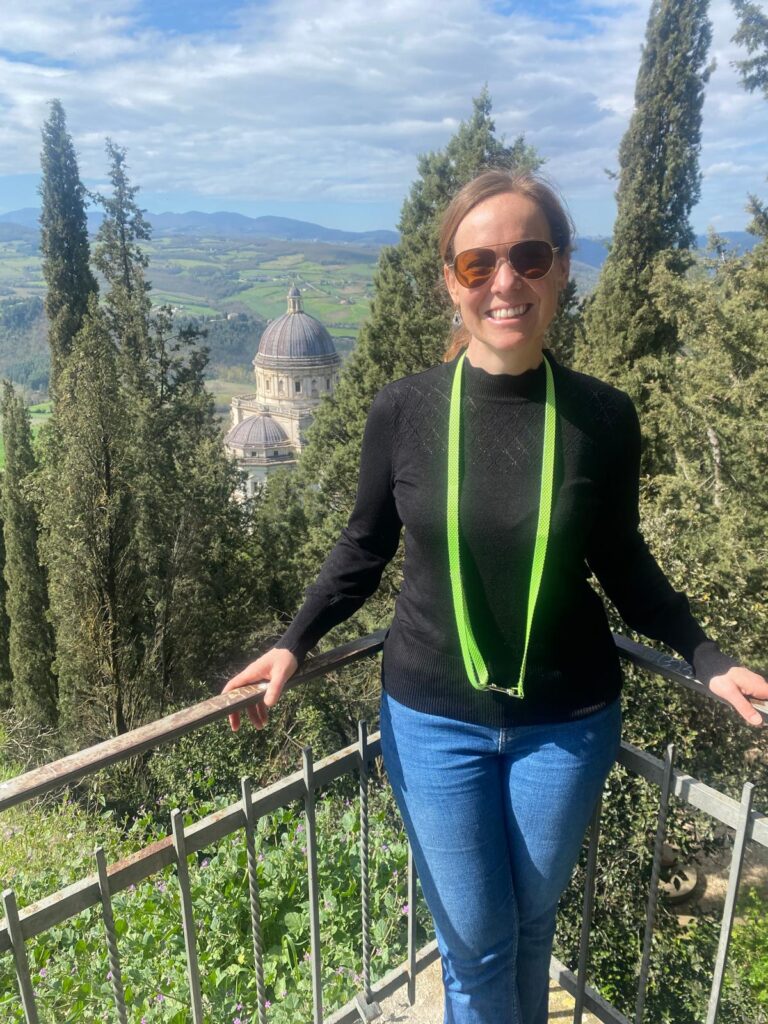
She had executed the move with tactical precision and chose a town deliberately small enough that no one would speak English back to her, forcing total immersion. She bought the house. She absorbed the cadence of the language, tracked the cultural rhythms, and convinced herself she was comfortably ahead of the curve. When friends back home asked if she was worried about isolation, her answer was swift and practiced: No. I’m putting in far too much effort to be lonely.
And then there she was, twelve months in, sitting in that house — lonely not in spite of the exhaustive effort, but somehow because of it.
“When you really want to become part of the fabric of a culture,” Sarah admits, “the shine kind of comes off the penny.”
It is a deeply un-romantic admission, and precisely the kind of truth that gets edited out of the expatriate fantasy. None of this is the Italy that gets packaged and sold on Instagram in what seems like a constant Italy expert MLM scheme.
It is, however, the reality described by seven women living here when I asked them, in the spirit of Katy’s revelatory summer in Positano, what the country had actually done with the lives they brought to it.
None of Us Got the Movie Version But That’s Ok
Ask Gillian Longworth McGuire, freelance writer and author of Gillian’s Lists, who relocated first to Rome and later to Venice following her husband’s career, and she will tell you the romantic ideal never applied to her in the first place.
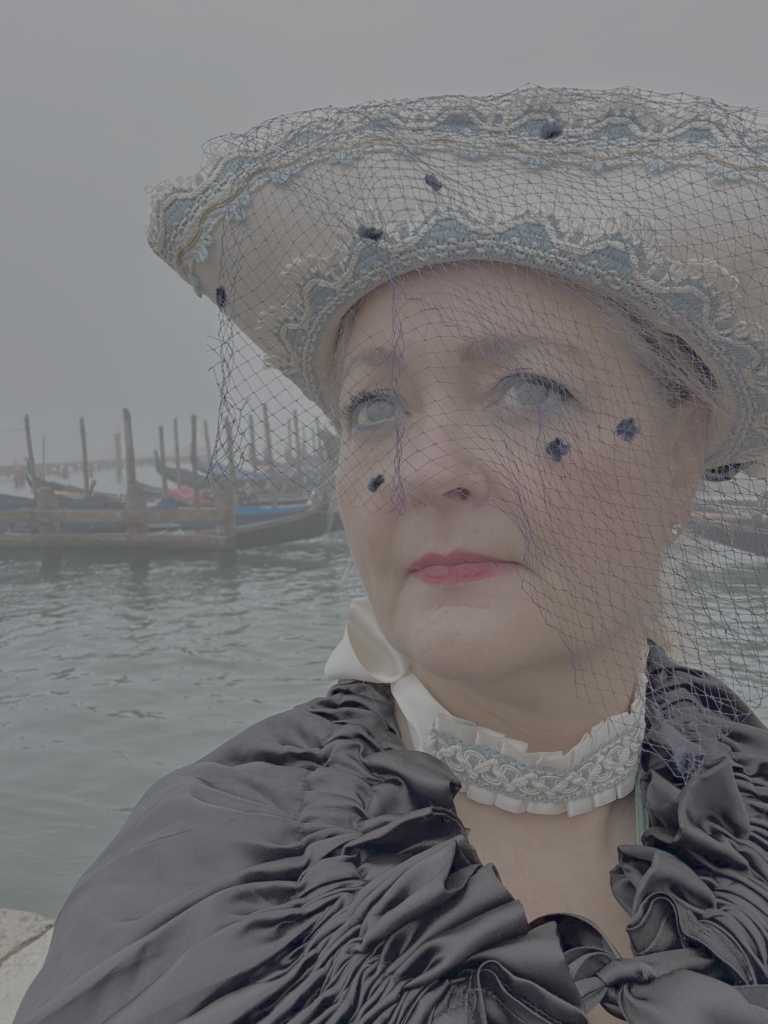
“Most people fall in love with the idea of Italy before they ever touch down,” she says. “Italy was never a postcard to me.”
Her early years were defined entirely by the unglamorous friction of European bureaucracy: securing an apartment, navigating a school system, tracking down an English-speaking dentist, finding a hairdresser who understood her hair. The legendary beauty of her surroundings didn’t fully register until more than a decade in. Only when the logistics settled enough for her to, as she puts it, “come up for air and realize the astounding beauty sitting in my backyard.”
Samantha Wilson, founder of Vivace Media and A New Life in Italy and Smart Move, arrived twenty-two years ago alongside her mother just weeks after her father’s death.
She says almost the exact opposite while arriving at the same conclusion. For Samantha, Italy never lost its cinematic magic. “I still look around some mornings and can’t believe I actually get to live here.
Yet she is remarkably unsentimental about her own evolution. Moving abroad didn’t miraculously reinvent her. She didn’t step off the plane as a brand-new woman; she simply grew up. It was the work of aging and self-understanding, and it happened to be here in Italy.
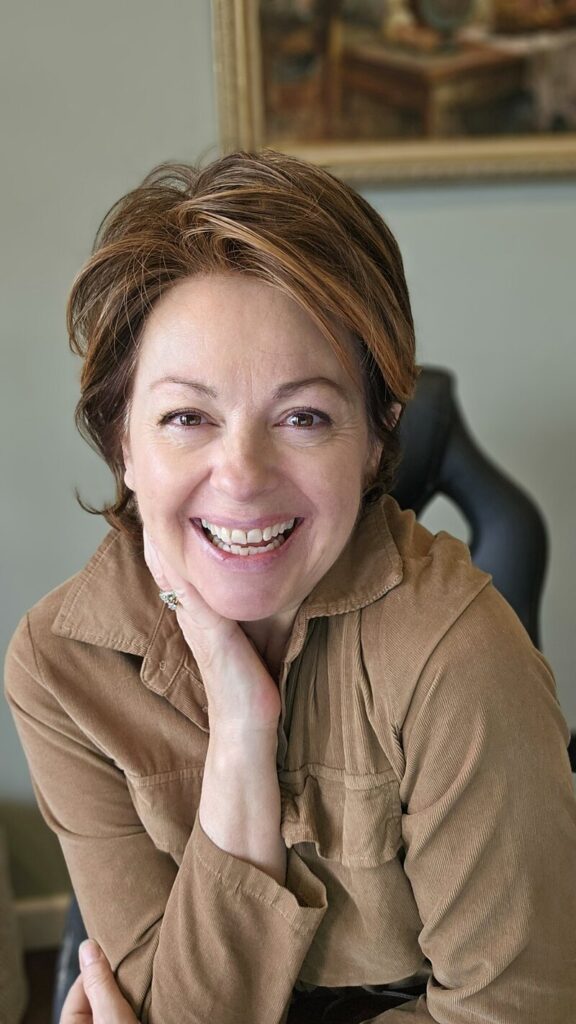
For freelance writer Sema Karaman, the shift away from the postcard occurred the moment she realized how much active, boundary-stretching effort the country demands daily. Coming from Germany, where a trip to the supermarket is an exercise in efficient anonymity, Italy felt like a shock to the system.
“If I have 15 minutes between meetings and want to grab a quick coffee in my Rome neighborhood, I actually can’t,” Sema says.
“Because in those 15 minutes, I have to interact with the person who serves my coffee; I have to speak to people I recognize. Italy expects an active participation in the public space. You realize people aren’t these caricatures of ‘calm and easy’ — they can be annoying, frustrating, or overly local. It’s when you accept that complexity that you realize you’re living in a real place, not a fantasy.”
For Sophia Pisana, Client Experience & Efficiency Coordinator at Smart Move Italy, who grew up visiting family in Italy every summer, the transition felt seamless at first. But living here permanently requires an entirely different awakening.
“About six months in, it clicked that I still had to focus on everything I was struggling with back in the States,” Sophia reflects. “The anxieties, the long-term goals, the personal work — even though I was in this new, exciting, beautiful place, life is still life here. Italy didn’t hit a pause button on my inner world.”
For Mary Gray, writer and editor, who first moved to the country in her twenties after falling in love with Renaissance art in high school, the postcard dissolved six weeks into her adult move to Rome. The carefully laid job plans she had carved out completely blew up, leaving her stranded on the other side of the world with no safety net and no Plan B.
“I found myself with no real job prospects and no experience,” Mary recalls. “I just got addicted to solving little puzzles every day to make it work. Every immigration document acquired or new friend made felt so hard-won.”
Years later, during the harrowing isolation of Italy’s strict COVID-19 lockdowns, Mary sat alone in her tiny Florence apartment as the walls closed in.
“If there’s stuff you haven’t reckoned with within yourself, being forced into that silence makes you confront it. It heightened my awareness around all the ways I wasn’t taking care of myself or was falling into self-sabotaging patterns.”
What We Were Running From (and Toward)
Nobody featured here arrived in search of a cinematic reboot.
Samantha and her mother were simply running out of air in a family home that had just lost its patriarch. Italy was where they happened to land. Sarah had spent years assuming her European pull would eventually drag her to England, her family’s ancestral home, until a series of trips through central Africa sparked a desire for something between two extremes: a life anchored by Western ease, but tempered by an unhurried pace.
Sophia was sitting in the limbo of post-university temping, staring down an uncertain job market back home, when she decided to take the leap and search for work in the country she’d always been drawn to, a decidedly brave move.
What finally catalyzed Sarah’s move wasn’t a master plan. It was a divorce, a sudden trip to Florence, and the uncanny, hyper-specific sensation of arriving somewhere foreign and recognizing it instantly as home.
Every subsequent return to Canada felt like trespassing in a stranger’s life which is a sentiment many of us feel. When the pandemic stalled her career and the Brexit clock began ticking down toward December 31, 2020, the romantic dream dissolved into a logistical problem with a hard deadline.
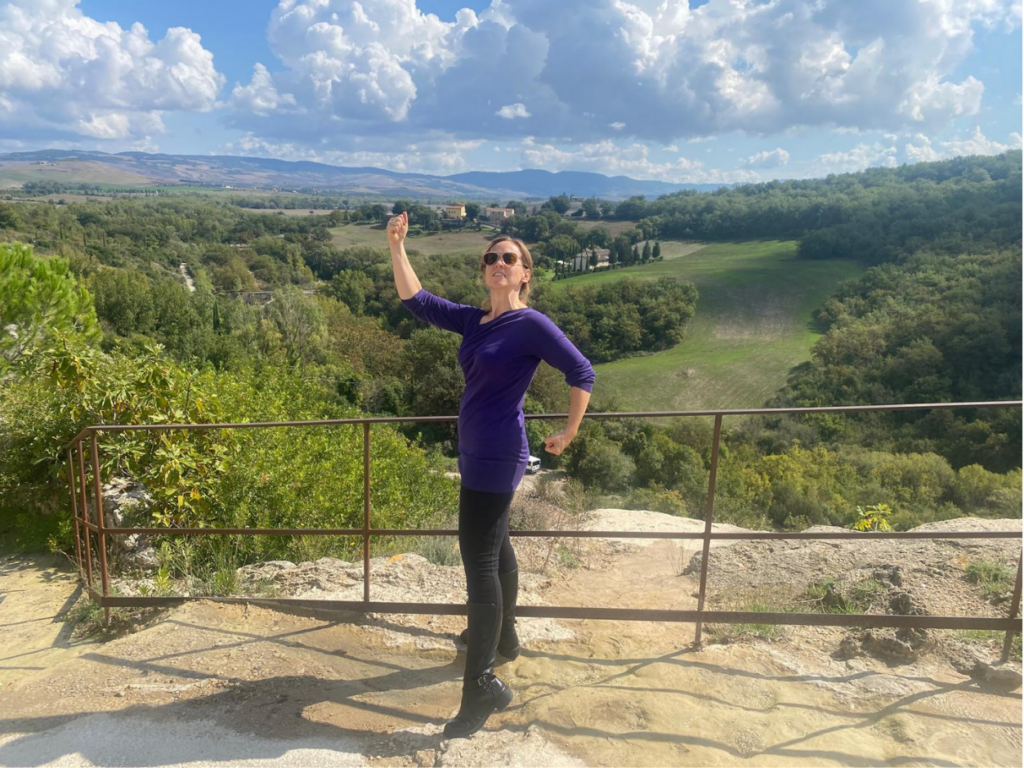
For Sema, moving exposed a subtle entitlement she’d carried through previous international relocations — the passive expectation that a place should transform her.
“When I was younger, I thought home was a place you arrived at that was perfect, where everything clicked,” Sema explains. “Italy changed that. I realized home is like a healthy marriage: love is an active verb. Home is a place that gives you the urge to work toward something every single day, knowing it’s a process with no finish line. Italy activated that desire in me to give as much as I take.”
“Grief was what first brought me here,” Samantha shared. “But grief isn’t what made me stay.”
All The Small Things
Ask what fundamentally shifts when you make a country your life rather than your vacation, and no one offers a sweeping epiphany. They describe habits that reclassify themselves as survival mechanisms.
For Sarah, it is an uninterrupted hour most mornings in the local piazza alongside her partner — a steaming hot cappuccino and nowhere to rush to. “Back home, coffee was a line item in a calendar,” she reflects. “A micro-appointment booked to catch up with someone.” Here, it is closer to a daily grounding ritual. “It’s as small as an Italian espresso, but it sets the posture for everything else.” What caught her off guard was how quickly the habit stopped feeling like a luxurious indulgence and started feeling like basic maintenance.
Sema calls this involuntary grounding a forced lesson in presence. “You cannot sleepwalk your way through life here. When I’m resting, I’m present. When I’m in conversation, I’m present. It requires a lot of intentionality, like building a muscle. People don’t do small talk; they will immediately start talking to you about their son’s ex-wife or a health issue. At first, spending an unexpected 15 minutes talking to someone when I was supposed to be writing felt indulgent. Now, I try to lean into it.”
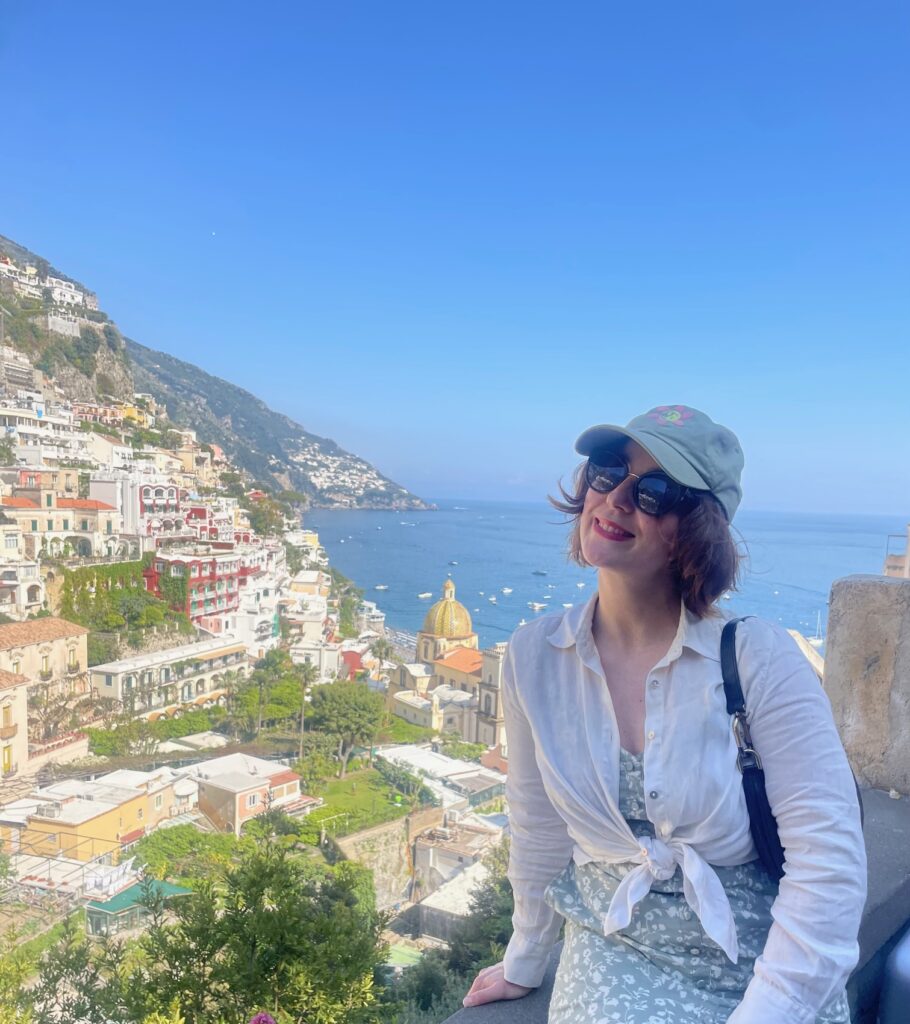
For Sophia, the recalibration happened in her mid-week social rhythm. “Back home, grabbing a spontaneous drink or gelato with friends on a weeknight felt like something you only saved for special occasions or weekends,” she says. “Here, it completely stopped feeling like a production. It’s integrated into the day. It’s just living.”
For writer and strategic communications officer Alexandra Korey, creator of ArtTrav, the calibration is seasonal rather than daily. Her shift is the concept of a true, uninterrupted summer holiday — not the polite five-day stretch a North American corporate office grants as a courtesy.
“I’m still trying to fully digest the concept,” Alexandra admits, acutely aware that even modern Italy is slowly losing the habit under modern economic strain. The summers she successfully carved out to step away from the grind and focus entirely on personal creative work transformed her understanding of rest. It wasn’t laziness; it was essential fuel for the year ahead.
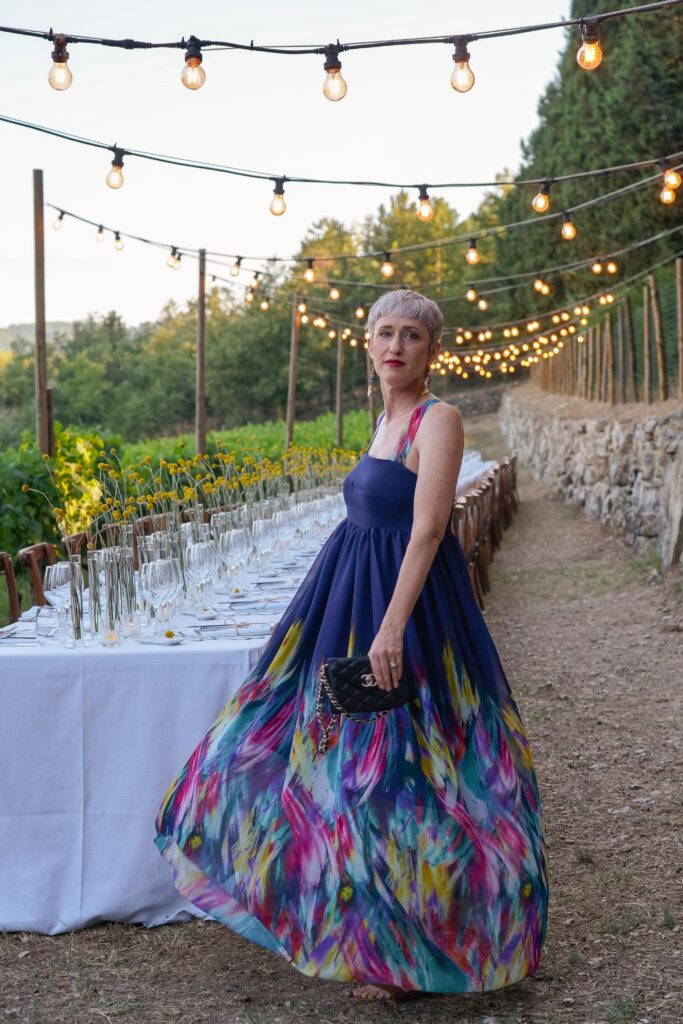
For Gillian, the shift is found in the micro-community. Every June, she travels to Ponza for the local saint’s day. On her birthday, the owners of her local beach club call her to sing via WhatsApp voice notes. “My Italy is built on small, quiet moments,” she says. It is a deliberate recalibration, not a consolation prize.
For Mary, living in Italy reframed her entire relationship with rest and escape. Having spent her adult life abroad, she views the occasional weekend trip not as a frivolous luxury, but as a vital lifeline. “I’m still not great at resting after years of building a life from the ground up. It takes a certain kind of doggedness, so it can be hard to let your shoulders down. A change of scene can help with that.”
What We Wish the People Back Home Could Actually See
Because Samantha’s father passed away before she ever saw Italy, every thought of sharing her current life inevitably circles back to him.
She doesn’t imagine showing him panoramic views of the coast. She pictures him simply watching her live — noticing that she is content, that her children are thriving, that the life she carved out holds up under scrutiny. He was the one who taught her never to apologize for wanting things out of life. If she had one final afternoon with him, she’d want to say thank you over a glass of Chianti.
For Sophia, introducing someone to her life isn’t about the surroundings — it’s about the people who fill them. “I’d want to show them the community I’ve built here,” Sophia says. “The people I’m close to share my deepest values, particularly when it comes to connection and relationships. Above all, I’d want them to see that community and just know that I’m okay, even across the distance.”
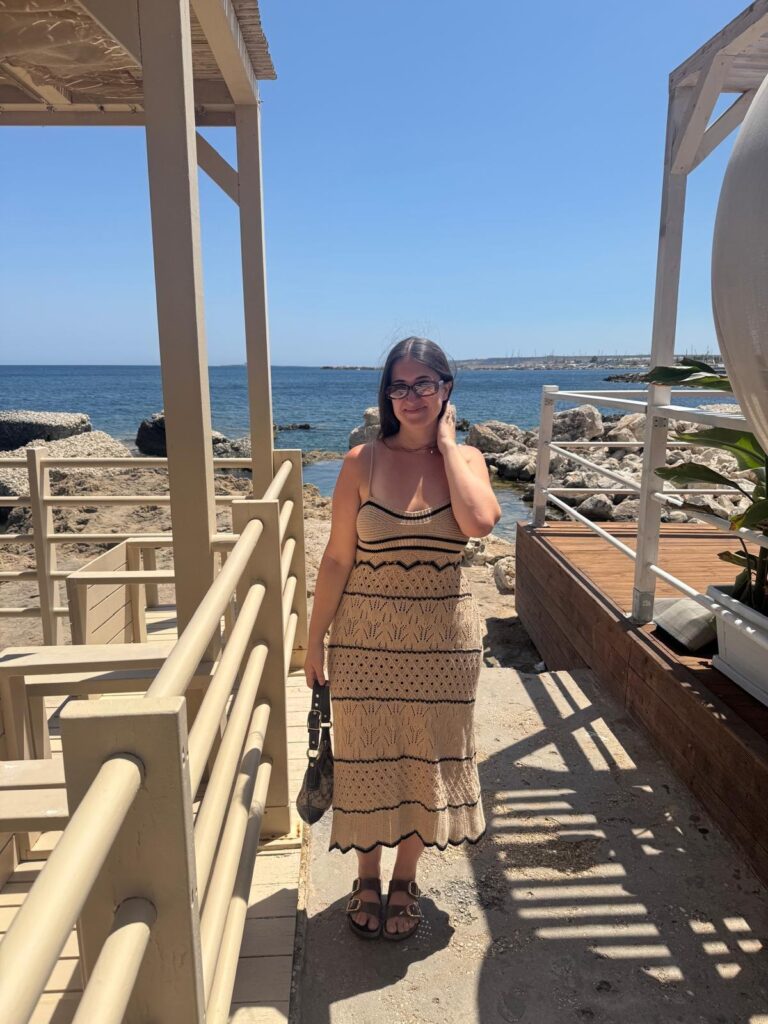
For Alexandra, the answer runs counter to her family’s historical trajectory. Her maternal great-uncle immigrated to Canada as a young man after World War II displaced their family, part of a generation that labored intensely to build stability on the other side of the Atlantic. Decades later, in 2004, he flew to Italy at nearly eighty years old to give her away at her wedding, though she suspects he never quite understood why she was voluntarily moving back to the continent his generation worked so hard to leave.
What she’d show him now isn’t the grand architecture or the historic sites. She’d bring him to her vegetable patch and serve him a home-cooked meal. He loved good food, and some languages require no translation.
Gillian’s mother will likely never see Venice in person. What Gillian wishes she could share with her isn’t the grand skyline, but the mundane errands. Her daily walk to the market crosses stone paths Napoleon ordered paved across a canal, past a church erected after a 16th-century plague that locals still honor every November without fail. She buys her produce off a barge. A resident dolphin frequents the end of her street.
“A gondola and a garbage barge,” Gillian notes, “are equally Venetian.”
It is that seamless collapse of the sacred into the everyday that she wishes her mother could step inside, if only for an hour.
Sarah’s answer isn’t a physical destination at all. She wants her sister to experience why a fifteen-minute errand in a small Italian town takes an hour — because you will inevitably be stopped, and stop others, every few paces along the way.
“It has nothing to do with what Google Maps tells you about distance,” Sarah says. “It’s about friction, contact, and the tiny ways you intersect with other lives.” She no longer leaves the house early to account for traffic; she leaves early because she expects to be delayed by human interaction, and she has entirely stopped viewing that as a delay.
Mary would bypass the famous vistas entirely to walk someone she loved through the specific street corners of her daily existence — the lived-in texture of her life in Florence and Rome. She pictures tracing the physical geography of her growth: from Borgo della Stella where she lived as a wide-eyed study abroad student, to Via Romana, and through each apartment that anchored her changing routines. “It’s so special to show someone the actual texture of your day,” Mary reflects. “For them to picture you going about your life is so much more resonant than showing them a random panoramic view.”
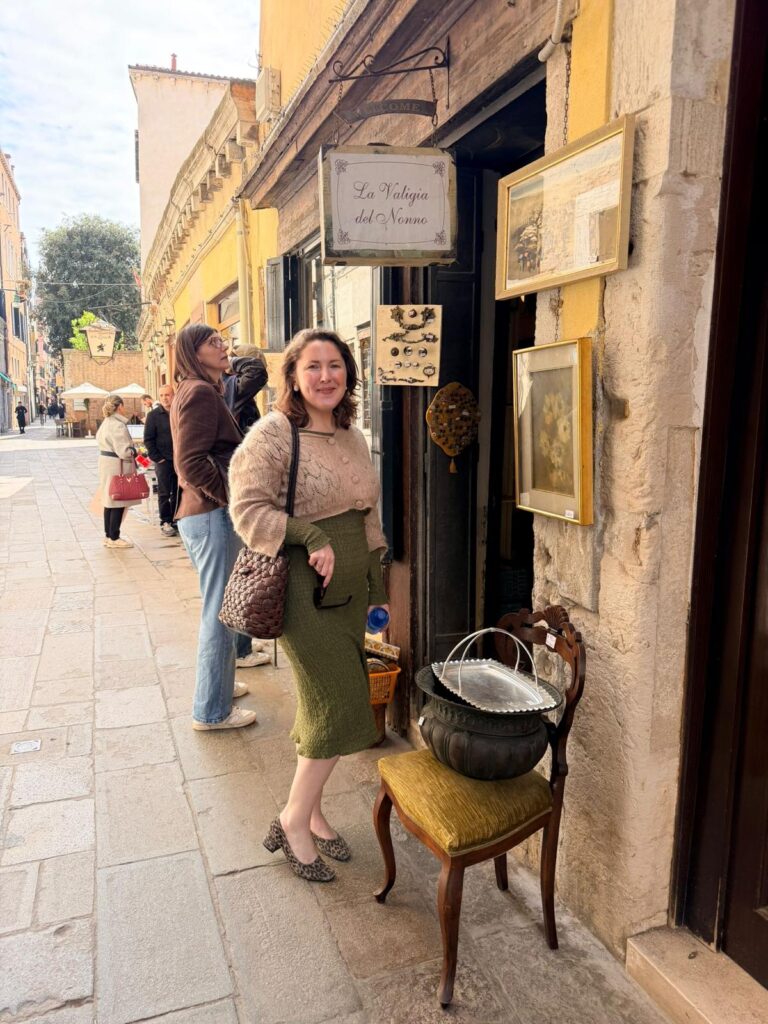
Sema wants to bypass the curated, high-status Instagram aesthetic altogether and bring her friends to a crowded public beach.
“I’d show them a public beach where people aren’t wearing their best clothes,” Sema says. “They’re in stretched-out bikinis with faded towels, bringing coolers packed with watermelon and appetizers. In my age group, there’s so much emphasis on status and trying to look like you don’t care. But there is a pure, unpretentious joy in sitting on a public beach, eating watermelon as the sun goes down, letting the juice drip on your face, and not giving a damn. I want them to feel that kind of unvarnished freedom.”
You Can’t Outrun Yourself, Even in Italy
None of these women would claim that Italy healed them cleanly, though we are all admittedly, in a state of constant reconstruction. Albeit mostly on our own terms.
The move didn’t erase Sarah’s divorce, restore Samantha’s father, cure Sema’s restlessness, resolve Sophia’s post-grad uncertainty, or lessen the years Gillian spent submerged in the raw logistics of relocation before she could finally admire the view. Nor did it undo the years of puzzle-solving it took Mary to build a life here from nothing.
What the country provided was simply a different place to set those burdens down. It’s much like Katy in One Italian Summer—she doesn’t magically regain her mother in Positano, but she finds a space where she can sit across from her memory and see her more clearly.
Sarah is still, by her own candid admission, someone who could wake up deeply lonely tomorrow. The difference now is that she has stopped being surprised by it. Instead, she just leaves the house a little earlier, in case someone on the street wants to talk.

It is refreshing to read the realities of these women who moved to Italy. I dream about it all the time, my deceased Mom was born there, I have close family there, yet I know moving there alone (in my 70’s) will not solve the loneliness I feel here in the US already. At least here, I have an established life, with volunteer work, a few friends, family etc etc. Soon I will spend a month in Italy, my longest trip ever. It is a test to see how I feel being away from home that long. I still dream ….
Thank you for taking the time to read this piece Anna. We want to truly give a balanced perspective and a more nuanced take on life here than you typically see online. Keep us posted on how it goes for you on your month in Italy!
It is so true that moving to Italy has been ridiculously romanticized and I appreciate all of these stories. I’m soon to be 59 years old with all but one of my five kids now moved out of the house. I have evenings alone – hubby works evenings – and stare through my living room, dining room, kitchen and try and remember the noise and chaos of my kids with their friends making a mess. And a lil’ loneliness creeps in. I push it aside.
My husband and I spent June in Italy in the Le Marche region attending an Italian Immersion program. We got to learn a little, tour a little, but the best part was living like a local in a small apartment. I always dreamed of retiring in Italy but honestly, three weeks in and I missed my kids, my dogs, my life. I am not giving up on retirement there, but it was eye-opening. With our first grand-child due this December, I wonder how I could live on the other side of the world away from everyone. I don’t know if I could live without the noise and the chaos.